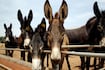
A team of Clydesdales delivers dignitaries to the unveiling of the Waterfalls Agriplex, a privately funded equine event facility, soon to begin construction on the edge of Milverton. “27 years ago this was a vision. And, it has taken that long to actually get the resources around it, and the community support that was required in order to pull this off,” said Ken Knox, spokesperson for the Waterfalls Agriplex. The Agriplex is the vision of Eli Ebersol, a Milverton area Mennonite entrepreneur and horseman, who has compiled a team of Perth County based investors. The team is expected to build a 250,000 square foot agricultural and event facility with a focus on national and international equine events. “This is a huge, huge industry. Way bigger, I think, than all of us realize. The Royal Winter Fair, you know, it attracts thousands of people all over the world, from the States, from Canada, from different countries. So yes, this will attract all those people as well,” said former Municipality of Perth East Mayor Rhonda Ehgoetz. Similar to Regional Equine and Agricultural Centre of Huron (R.E.A.C.H) in Clinton, but more than twice the size, the Waterfalls Agriplex plans to open with a bang hosting the 2029 World Clydesdale Show. The show will feature more than 600 heavy horses, and thousands of visitors from around the world. “We’ve committed to have this project up and operating to have a World Show of Clydesdale horses here in 2029. So, that’s the target, and we are going to meet that target in spades,” said Knox. Unlike R.E.A.C.H Huron, which was largely funded with government dollars, the multi-million dollar Waterfalls Agriplex is entirely privately funded at the moment. “That is a huge deal. Huge deal that it is privately funded, and the people are all behind what Eli wants to do. As Ken said, it’s a dream that he’s had, a vision and now it’s becoming a reality. And, for the people to all step up and help be part of it, that’s just wonderful,” said Ehgoetz. “It is going to be developed in phases. The first phase is privately done. We need to encourage all levels of government to be more involved, though. We’ve got the local governments heavily involved now, and we need the province and the federal government involved as well in order to reach its full potential, because this will be an economic driver for livestock in Ontario and in Canada over the next half century. It’s going to be able to house and host all sorts of livestock sales, livestock shows, educational opportunities, and it’s going to be able to showcase Ontario agriculture from the livestock perspective to the rest of the world,” said Knox.