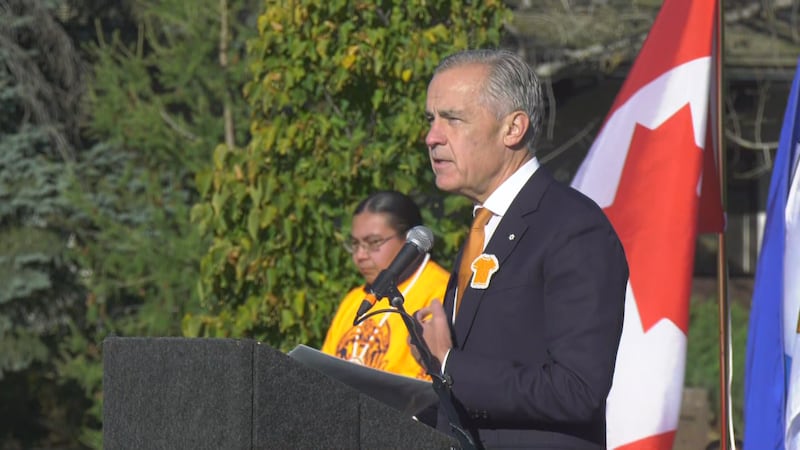
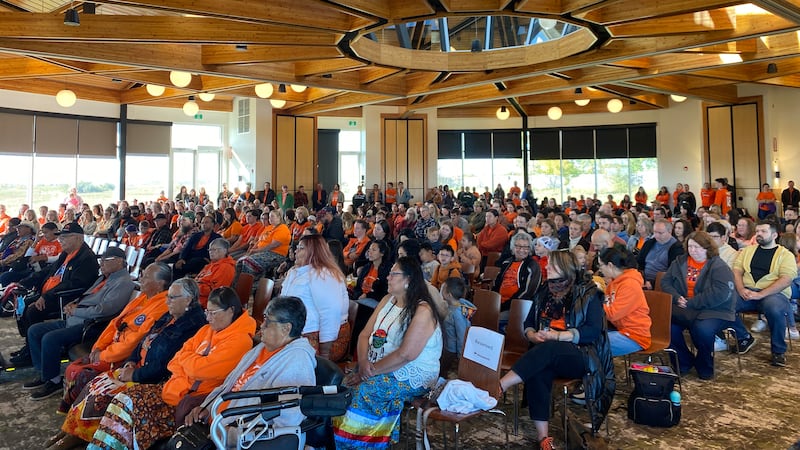
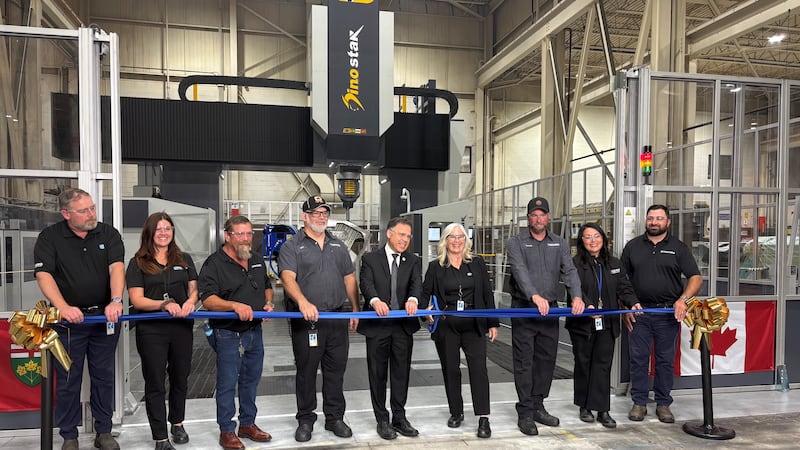
In a world of tariffs, market changes, and political tensions, Toyota held an unveiling for its Canadian-built RAV4 on Friday in Woodstock, Ont. The latest generation, built in the Oxford County city and in Cambridge, Ont., will be exclusively hybrid. In what’s believed to be an automotive first, the rollout vehicle was honoured with a traditional smudging ceremony at its production launch in Woodstock. Despite U.S. tariffs, RAV4 sales have not slowed as the vehicle proves to be a hit with consumers on both sides of the border. In 2025, more than 537,000 were produced. “It’s a very important product for North America. It’s a very, very important product for us,” said Tim Hollander, president of Toyota Motor Manufacturing Canada (TMMC) assembly operations in Canada. “We’ve got 8,500 team members here that are excited to build this great product, and we’re ready to get it rolling, get it out on the road.” Peak production of the vehicle is expected to begin in March, and overtime is anticipated to meet demand. But for now, new jobs for the region are not. “We’re pretty much maxed out on, you know, how many we can build here,” said Scott Mackenzie, Toyota’s director of corporate and external affairs. The maxed production is in sharp contrast to the situation facing many other Canadian automakers and their employees, including those at nearby GM Cami Automotive. At the rollout, federal and provincial officials recognized the Toyota Canada success story amid worldwide uncertainty. “You may have heard Prime Minister Carney’s speech lately, where he laid out some of the new realities of our global order, and in some cases, we are not able to partner in the way we used to. And in some cases, we must continue to be partners. And this plant is an example of that integration,” said Karim Bardessy, the parliamentary secretary to the Federal Minister of Industry. Brian Saunderson, MPP, assistant to the Minister of Economic Development, job creation, told the assembled crowd of Toyota workers, “We are determined to continue to work together in the face of global uncertainty and uncertainty in the automotive sector. We need to change how we do things.” Eighty-five per cent of RAV4s built here are shipped to the United States. For now, Mackenzie states tariffs have not spiked U.S. vehicle prices, “Will there be price increases over time? Perhaps. But right now, we’re just trying to focus on, you know, pumping out as many as we can.” Mackenzie said Toyota is also absorbing the recently announced framework for importing Chinese-made SUVs into Canada, “I don’t think it’s, you know, a huge significance for here. And I don’t think it’s going to affect our operations here in Canada.”