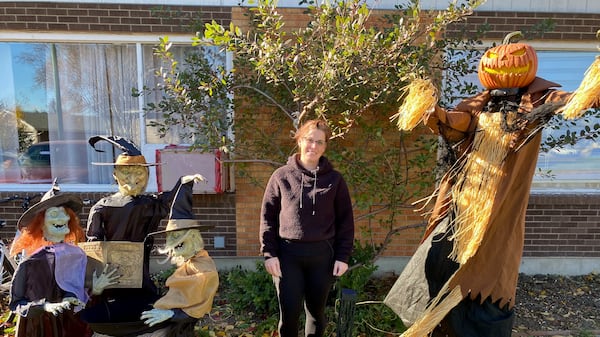
Emily Marie, a local artist and owner of ‘Unstitched’, spends hours making homemade crafts. Marie sells her creations at local craft shows, but lately she has been faced with an unusual challenge. “It has become a big problem in a lot of markets,” said Marie. “There are people coming in and passing off that they are making these crafts, not telling people they are AI.” Marie said vendors using AI should be honest and not claim their products as homemade. “They’re not considering the time, the energy, the thought that went into something like this,” said Maire. “For people to just be plugging a prompt into AI and just basically discrediting our hard work it feels almost insulting.” Experts describe this as “a big issue,” not only for visual art but also music, sounds, and text. “How these systems work is that they are trained on a huge amount of data that’s usually scraped from the internet–from artists who are out there, who are alive and trying to make money,” said Luke Stark, an assistant professor in the faculty of information and media studies at Western University. Stark argued these tools can be “extremely disruptive” and it is important for consumers to understand who is behind them. “You might feel like you get a little bit of benefit from using systems like Chatgpt to do x, y, and z at work, but then does that mean your job is at risk of being automated?” said Stark. “With these tools, don’t think about them as science fiction, think of them as automation tools benefiting someone in society and ask who that is.” While the future of AI may be unclear, Marie said her passion for sharing art with the community isn’t going anywhere. “I cannot tell you how amazing it feels to see somebody who looks and says, ‘Oh my gosh that’s so cute,’” said Marie. “I thought that was cute and I love that other people think it’s cute too.”