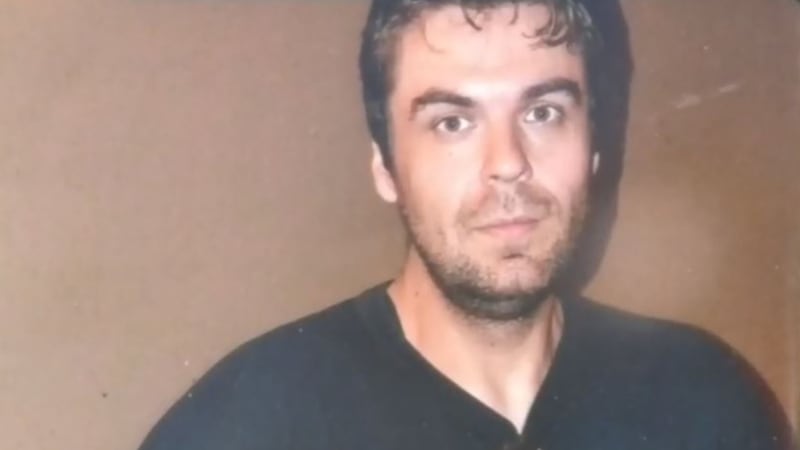
Spending time with friends and perfecting his jump shot was all Haneef Rasheed worried about at 24 years old. “My athleticism was a big part of my identity,” said Rasheed. “I was very consumed with basketball.” That quickly changed. “All of a sudden I just got this really sharp headache,” said Rasheed. “I didn’t think much of it, I just tried to tough it out and wait for it to go away but it wouldn’t go away.” Rasheed suffered from a hemorrhagic stroke caused by a brain AVM, an abnormal tangle of blood vessels. He was given a 30 per cent chance of survival and lost function on the left side of his body. “I was being fed through a pipe in my stomach and I lost 80 per cent of my muscle,” said Rasheed. “My friends still tell me I was skin and bones.” Almost ten years later on World Stroke Day, Rasheed is using his story to highlight a key message. “Stroke and heart disease is not limited to old people,” said Rasheed. “These things can happen to anybody.” World Stroke Day is observed globally on October 29 to raise awareness on the seriousness of strokes, improve care, and promote prevention. “About 1.5 million people every year will suffer a stroke below the age of 50,” said Sachin Pandey, Division Head of Diagnostic and Interventional Neuroradiology at University Hospital. “So it’s very important to know the signs and symptoms to look out for.” Pandey said one of the easiest ways to learn the warning signs of a stroke is through the acronym “B.E. F.A.S.T.” created by the World Stroke Organization. “B” stands for balance loss, “E” for eye or vision changes, “F” for face drooping or twisting, “A” for arm weakness, “S” for speech difficulty, and “T” for time to call 911. “Any of those symptoms you really should call 911 and get emergency medical care,” said Pandey. “You can lose close to two million brain cells every minute.” Rasheed said he is grateful to be alive and won’t let anything get in the way of him becoming the person, or athlete he was always meant to be.