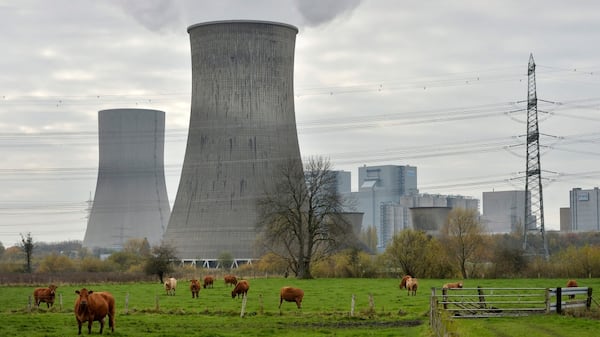
The 13-year, $13-billion construction project to refurbish six of the eight reactors at the Bruce Power Nuclear site has reached it’s halfway point. “What we have going on here at the Bruce site is one of the largest infrastructure projects in Canada. The Major Component Replacement (M.C.R) isn’t just about refurbishing the unit and bringing it back, it’s about positioning that unit for another 30 to 40 years. So, we’re really talking about mega projects in Canada, that are nation building,” said Bruce Power’s Chief Operating Officer and Executive Vice-President, James Scongack. Work to refurbish two of the six reactors under the Major Component Replacement program, has been completed. A third reactor just passed a major milestone, replacing 480 calandria tubes, 25 days faster than the previous reactor. “We’re able to, with the same units, do the work repetitively, find efficiencies, find innovation, so everyone improves in safety, quality, cost and schedule,” said Scongack. The work that will extend the life of Bruce Power’s eight reactor fleet to 2064 has been on time, and on budget. In some cases, ahead of budget, and ahead of time said Bruce Power officials. Remote robotics are amongst the many innovations being used by the 5,000 people working on the Major Component Replacement at Bruce Power, at any given time including Rory Ingham, in Fuel Handling Operations. “It’s right at the brink of technological development within nuclear. Bruce Power seems to have a leg up compared to other nuclear utilities in the country, and I think even the world. We’re constantly developing our technological processes. Our engineering groups are really engaged, everyone really cares about what they’re doing here, and being a little part of that within fuel handling is a lifetime achievement for myself. I really am proud to be a part of it,” said Ingham, who has worked at Bruce Power since 2005. The refurbishment project isn’t just replacing the parts in each reactor, and putting it back as it was. Improvements are being made to squeeze even more power production from each reactor as it’s refurbished. “Our goal is to be a 7000 megawatt (MW) site for the 2030’s. And, if you look at that from where we started at 6300 MW, that’s the equivalent of two Small Modular Reactors at peak generation. So, it provides the incremental power to the province that it needs, but most importantly, it’s one of the most cost effective, lowest cost, incremental power, we can get,” said Scongack. It’s a project, Ingham plans to see from start to finish, as refurbishment work is set to be completed by 2033. “These are mega projects that cost millions of dollars to complete, but it will allow us to continue operation well into the future, and make power for Ontario’s grid for many years into the future,” he said. Refurbishment work on Unit 5 at Bruce Power begins in November, with Units 7 and 8 to follow in the years to come.