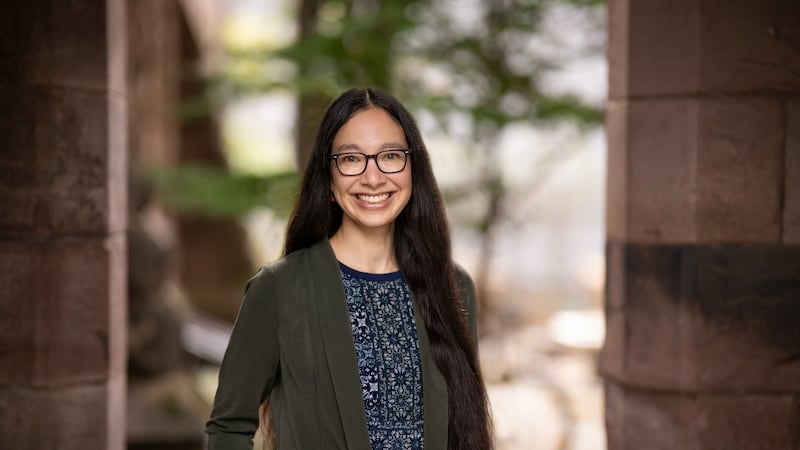
Barbara Clark is 101 years old. “I’ve always been active,” said Clark. “That’s the secret.” When she’s not gardening or playing the piano, Clark is exercising. “I think everybody should do exercises,” said Clark. “I started a long time ago.” Clark said she played golf to keep fit in her earlier years. Her last game was nearly a decade ago when she was 92. “It wasn’t a very stellar game,” laughed Clark. “Believe me.” Now, she’s traded in her golf clubs for dumbbells and trains with other dedicated seniors twice a week at Chartwell Dorchester Terrace, a retirement community. “It gives them the ability to be more independent and to move and to have less assistance,” said Elaine Connolly, the workout class instructor. “They’ve noticed a big difference, and they’ve all increased their weights.” Connolly said the classes include a warmup, strength training, balance exercises, and stretching. “It involves everything,” she said. “I don’t miss a muscle group.” Lindsay Nagamatsu, a kinesiology professor at Western University, said strength training can improve balance, independence, and brain health for older patients. “Weightlifting can improve cognition, including executive function, which refers to our ability to think, plan, make decisions, our memory, and our attention,” said Nagamatsu. “This is true in the healthy preclinical and clinical older adult population so keeping sharp as we age is really important.” Clark agrees, “It keeps me young.”