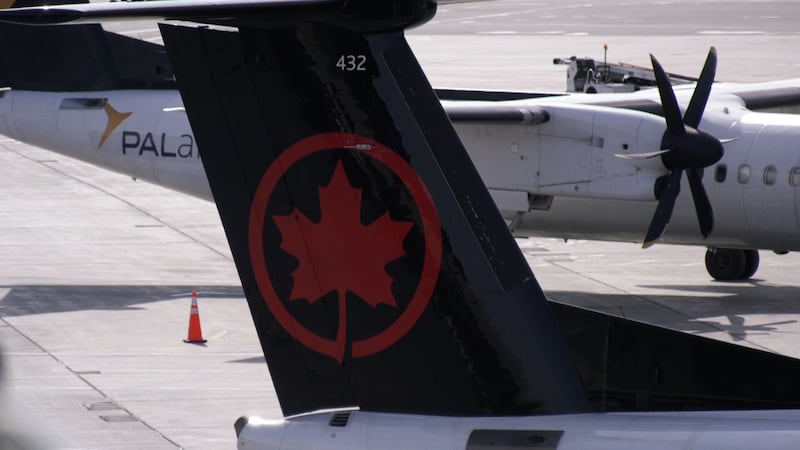
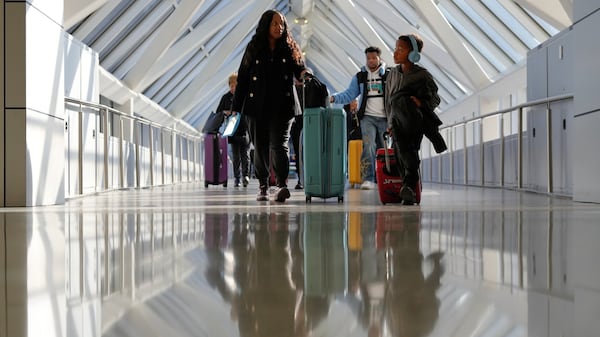
A couple from Kitchener is still recovering financially and emotionally after their flight from Cancún International Airport was cancelled amid the U.S. Federal Aviation Administration (FAA) ground stoppage. Stephen Parks and his fiancé Rebecca Dziarski said they had been looking forward to their trip to Mexico for some time and everything was perfect, until it was time to fly back to Canada on Nov. 13. The pair had already boarded their Friday night flight bound for Toronto Pearson Airport. “When the FAA ground stoppage hit, we were stuck on a plane for six hours,” Parks explained. Despite not leaving from or landing in the U.S., the flight wasn’t cleared to fly through American airspace. Once they deboarded the plane and got their bags, Dziarski booked a stay at a nearby hotel where they planned to spend the night. “[People at the Air Canada desk] said that they would book us on a plane as soon as they possibly could, but up until they could get us on a plane, it was our obligation to find shelter, food, water, and then basically get ourselves back to the airport when they could find us a flight,” Parks said. Although the hotel they had booked was less than 10 minutes away by car, the couple said the trip would cost them $60 in transportation costs due to surge pricing. “We had to pay a large sum of money, just to get a seven-minute car ride to a hotel where they told us that they had oversold and there were about 80 other people that were in our same situation,” Dziarski recalled. “They were strewn around the lobby, just kind of sleeping on floors. We saw families with children trying to get a room … people with elderly parents.” Without a room to stay in, the couple returned to the airport where they felt safer. It wasn’t until the next morning when they learned how long they’d be stranded in Mexico. “I was still on hold with Air Canada, but Rebecca was able to speak with an agent, at which point they said they could get us on a flight Wednesday. But, when they printed the ticket, we were on a flight for Thursday, which was six days after the cancellation,” said Parks. Taking matters into her own hands, Dziarski found a flight on Monday through WestJet and they returned home. In accordance with Air Passenger Protection Regulations, an airline must rebook passengers on their next available flight of any airline with which they have a commercial agreement with from your original airport within 48 hours of the end of the event that caused the disruption. If a flight is not available within 48 hours, large airlines must then try to find a flight from another company, even if they are competitors. If a large airline is still unable to rebook a passenger on a flight leaving the airport within 48 hours, they must find a flight at another nearby airport, if possible. “Air Canada blatantly disregarded the passenger’s rights,” said Gábor Lukács, president of Air Passenger Rights, a federal nonprofit organization. “Whether [Air Canada] does it by rebooking or they just take a corporate credit card and put it into West Jet’s website and buy the passenger’s ticket, that’s immaterial for the purpose of fulfilling Air Canada’s obligation.” Air Canada responds In an emailed statement to CTV News, an Air Canada spokesperson said they’re looking into specific circumstances of this case to better understand what occurred and will be in touch with their customers directly, but said in part: “The FAA ground stop disrupted air travel across North America, resulting in thousands of flight cancellations. In the days that followed, airlines worked to re-accommodate hundreds of thousands of affected passengers amid rapidly changing flight availability. At the time, rebooking options on Air Canada and other carriers were extremely limited.” While the Kitchener couple said they haven’t been offered any reimbursement, they’re hoping to spread awareness for anyone else in their position. “We’re very fortunate that we’re home, we’re safe. We had family that was able to check on the house, look after our pets and make sure that things were okay around here,” Parks said. Meanwhile, Lukács stressed that passengers in similar situations should fight for what they’re entitled to. “Make it clear that what they are seeking is not standardized compensation under the Air Passenger Protection Regulations, but reimbursement for expenses incurred because Air Canada failed to provide proper alternate transportation,” he explained. “[If] Air Canada refuses to pay, or they just ignore the passenger with respect to payments, then they need to take Air Canada to small claims court.”