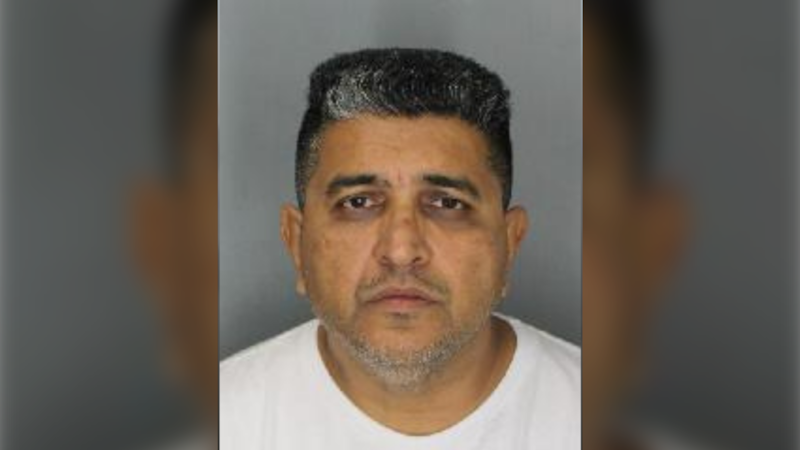
Ten inmates at Grand Valley Institution for Women have filed civil lawsuits after a November incident where a man was able to get into the medium security section of the prison. The claims raise concerns not only about how an intruder was able to get inside in the first place, but also the response by Correctional Service of Canada employees. Lisa, who asked that her last name not be shared, is one of the inmates seeking damages. “It was terrifying. It was absolutely terrifying. I mean, we’re in prison, we’re expecting to be safe,” Lisa told CTV News. “I’ve never heard of anyone attempting and succeeding breaking into a prison,” lawyer Jeffrey Hartman from the Toronto-based firm Lockyer Zaduk Zeeh, who represents the ten inmates, said. The statements of claim describe how the man got into the medium security compound on Nov. 2, chased inmates who were outside and attempted to get into two of the houses where prisoners live. After the incident happened, Waterloo Regional Police Service said two inmates were assaulted. A 28-year-old man from Kitchener was arrested; he was charged with break and enter, two counts of assault and mischief under $5,000. “It’s simply astounding that anyone was able to gain access to a federal prison for any duration of time,” Hartman said. No statements of defense have been filed yet and none of the claims have been tested in court. But Hartman said what happened is a violation of the inmates’ human rights, and re-traumatized women who have already experienced horrific abuse throughout their lifetimes. Some inmates said they felt they were making progress before the incident happened, and have now been set back again. Lisa, who was released on parole two days after the break-in, said she is struggling. “I don’t know how to pick back up and start again. Every time I go out, I’m looking over my shoulder. And it’s not because I think this man is going to come and attack me, but it’s reactivated all the traumas that I went through,” she said. “I really don’t know how to move forward from it at this point.” Combined, the inmates are seeking nearly $3.5 million in damages. Hartman said the incident calls into question one of the stated purposes of prisons: to rehabilitate offenders so they can reenter society. “When you have an event like this that just re-traumatizes people, it really calls into question the qualitative experience that they’ve had in prison, and whether those goals have been achieved or are even still valid.” New details on break-in The statements of claim offer new details about what the inmates said happened on the evening of Sunday, Nov. 2, 2025. It’s believed the breach occurred around 8 p.m. The intruder was able to get into the minimum security unit of the prison without detection. It’s not known how long he was there. The statements of claim allege that the intruder left four empty tallboy beer cans in the minimum security area, before scaling a fence and getting into the medium security compound. The lawsuits state the fence that separates the two areas is approximately six feet tall and topped with razor wire. There are fifteen houses in that area for women in medium security. Two inmates were on a walk that evening and saw the man scale the fence. At first, they thought he was another inmate, but quickly realized otherwise. “You realize you just broke into a federal prison?” one of the inmates said. The intruder said he did, and would wait at a nearby table for police to arrive. The claims said the intruder then chased some inmates and tried to get into one of the houses. The documents describe the man trying to violently force open the doors while inmates inside tried to hold the doors shut. Two inmates were struck while they tried to keep him out of their house. One woman later found out she ripped a tendon in her foot. Another woman tried to use a baking pan to protect herself as she barricaded the door. The women were able to lock the door, but then saw more inmates outside, so one went to warn them about the man. Lisa said she was walking with another inmate that evening when other inmates began screaming at them to get inside. That’s when she said she encountered the man, who came from behind one of the other houses. She said he was wearing a grey track suit similar to what is issued to inmates. “This man comes running from behind house 12, dashing as fast as he could toward us, and we just kind of stopped and turned and just started to run as fast as we could, with him on our heels,” Lisa told CTV News. Lisa said she ran faster than she ever has in her life to get into her house, which the man also tried to enter. “We slam the door shut and he jumps over the barrier and just smacks the glass with his palm. And I’ll never forget the look in his eyes. His eyes were like bloodshot. It took four of us to hold the door shut.” The claims allege that some inmates tried to call the prison’s Main Communication Control Post for help, but were hung up on or the calls were not answered. One woman ended up making a call to a friend outside prison instead. The claims say that when guards did come to the medium security compound, they walked and did not seem to be in a hurry. Some allege the correctional officers did not seem to realize the man was an intruder, until inmates yelled, “He’s not an inmate!” The man was detained. How long the man was in the compound before he was arrested is unclear, but based on the sequence of events and details such as the time it takes to make a call to a person outside the institution, Hartman estimated it was at least 15 minutes. Some inmates, including Lisa, reported seeing the guards later laughing about the incident. “We could hear them making jokes and thinking it was funny, like, ‘Oh who wants to break into a prison.’ But not thinking about the trauma that it just inflicted on us women,” she recalled. One inmate was left with the intruder’s blood on her hands. When that inmate went to get medical help, she said initially no one took photos of her hands even though it was important evidence. It wasn’t until she refused to wash the blood off that a correctional manager used her own phone to take pictures. The inmate also began taking medication as a precaution against possible HIV transmission, and experienced significant side effects. The claims also detail the inmates being brought into a meeting several days later, where Correctional Service of Canada staff described details of the incident differently than what the inmates said they witnessed. Some inmates also felt it was an effort to discourage them from exploring civil litigation. The claims also said that while Correctional Service of Canada now has a vehicle stationed in the area where the intruder scaled the fence, they saw a staff member inside sleeping at one point. “The Correctional Service of Canada (CSC) takes the safety and security of the offenders in our care, our staff, and the public very seriously,” a Correctional Service of Canada statement sent to CTV News said. “We remain committed to maintaining a safe and secure environment at all our institutions. “As this matter is currently before the courts, we are unable to comment on the specific allegations or the ongoing legal proceedings,” the statement concluded.