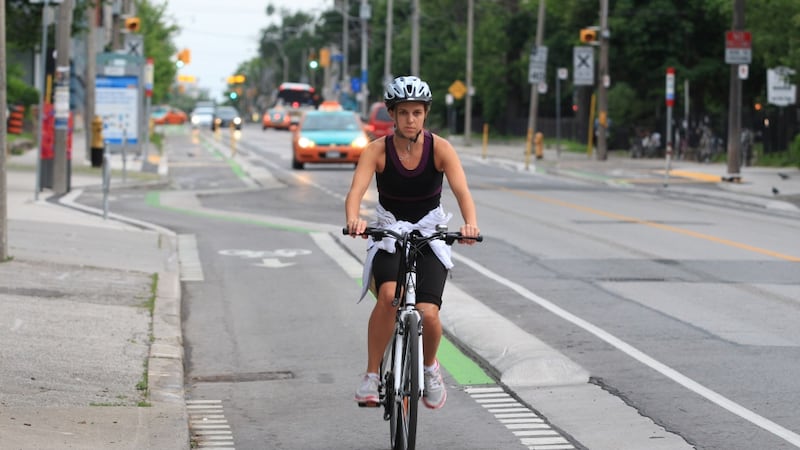
As a shakeup to Ontario’s auto insurance system takes effect on July 1, local cycling advocates and legal experts warn vulnerable road users will bear the brunt of the changes. Starting on July 1, nine out of 12 previously mandatory accident benefits will become optional. Under the provincial policy that was first introduced in the 2024 Ontario budget, medical, rehabilitation and attendant care benefits will still be mandatory. However, drivers will be able to choose if they want coverage for income replacement benefits, non-earner benefits, caregiver benefits, housekeeping benefits, visitor expense benefits, lost educational expenses, damage to personal items and death and funeral expenses. The change is intended to lower premiums for drivers, but some believe it shifts the safety net for anyone sharing the road with a vehicle. Before July 1, if a pedestrian or cyclist was hit by someone driving a car in Ontario, they were automatically covered under the driver’s insurance policy for lost wages and rehabilitation costs. But soon, if a driver opts out of income replacement or non-earner benefits to save money on their monthly premium, a pedestrian or cyclist hit by that vehicle will no longer be able to claim those benefits through the driver’s policy. Cyclists said they are worried. “I’ll get the minimum,” Janice Jim, a member of Cycle Waterloo Region, said. “I think the medical and some rehab, but that runs out quickly.” Insurance for non-drivers There is an option for cyclists and pedestrians to buy an independent insurance policy. “I read some quotes and it might be $1,000 a year for a cyclist or even a pedestrian,” Jim said. “Why would you expect a pedestrian that doesn’t own a car to get insurance? It doesn’t really make sense to us.” The alternative is simply trying to stay out of harm’s way. “I’ll just have to be really careful,” said Allie Beldan of the Tri-Cities Transport Action Group. “I keep good situational awareness. I make sure that drivers can see me before I move.” A sales broker from Donovan Insurance said costs for insurance vary greatly based on location. “If they wanted the optional benefits, they would need to purchase an Ontario Driver’s Policy (OPF 2),” Steve Lauzon said. He said cyclists or pedestrians would need their own policy if they are not a listed driver or the spouse or dependant of a someone named on an auto insurance policy. Lauzon said the cyclist or pedestrian would need OPF 2 before the collision. “Even if the driver opted in for the optional coverages, they don’t extend to the cyclist or pedestrian,” he said. Ripple effect David Shellnutt, who is originally from Guelph, Ont. and is known as “The Biking Lawyer,” warns the long-term impacts are far reaching. “It’s going to be a real mess,” Shellnutt said. “It’s going to force people back to work who are going through recovery that shouldn’t be back to work. It’s going to impact employers, it’s going to impact families, and it’s going to impact our OHIP system.” Previously, victims of a crash could only sue a driver in civil court if they suffered a “serious or permanent impairment.” As standard income replacement benefits are stripped from many drivers’ policies, injured pedestrians and cyclists will may sue for lost wages immediately. But that won’t be a quick and easy process. “What they’re going to have to do instead is seek justice through a long legal process. I can tell you in Kitchener, getting a trial date can take you up to two years.,” Shellnutt said. He said it will put a lot of pressure on an already strained system. “The courts are actually going to have to absorb a lot of these extra cases where an income replacement benefit would have nullified any civil claims,” Shellnutt said. In a statement to CTV News, a spokesperson for the office of the Ministry of Finance said the government is “providing drivers with greater choice and convenience when purchasing automobile insurance so they can choose the right policy that fits their needs.” Policies will automatically renew with all current coverage levels and limits unless a driver specifically agrees in writing to opt out of the benefits.