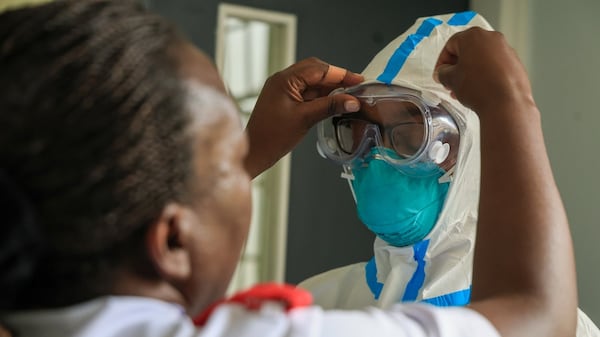
BUNIA, Congo — The fastest-growing Ebola outbreak on record started in February, months before it was officially declared in mid-May, the World Health Organization said Monday as responders in eastern Congo struggle to catch up. The WHO regional director for Africa, Dr. Mohamed Yakub Janabi, told a news conference that sequencing indicated the outbreak’s start. He said some cases early on were wrongly attributed to malaria and typhoid. “So we are chasing the virus, the virus is ahead of us,” Janabi said. Confirmed cases of Ebola in this outbreak have reached 4,200, including over 1,900 deaths, according to the latest government figures. The outbreak declared on May 15 is unlike most previous ones for Ebola because the rare Bundibugyo virus responsible for it has no approved vaccines or treatments. Early testing was conducted for the more common type of Ebola, contributing to delays. The outbreak is unfolding in some of the most challenging conditions imaginable, with strikes by some unpaid health workers, threats by rebel groups, anger from long-traumatized communities and misinformation asserting that Ebola isn’t real. Health teams travel remote, unpaved roads and have reported shortages of protective gear, while a vast population of displaced people struggles to find reliable water sources for washing hands. This Ebola outbreak has killed more people at a quicker rate than any other, including the 2014-2016 outbreak in West Africa that is considered the worst on record with over 11,000 deaths out of at least 28,000 cases. That one took about eight months to reach 1,000 deaths. Ebola is rare but highly contagious and can be contracted via bodily fluids such as vomit, blood or semen and with contaminated surfaces and materials such as bedding and clothing. The disease it causes is severe and often fatal. Last week, WHO Director-General Tedros Adhanom Ghebreyesu said Ebola is spreading faster than efforts to fight it. New cases are doubling in some hot spots, Tedros said on X after meeting with officials in the capital, Kinshasa. Health authorities have said between 60 per cent and 70 per cent of new cases are recorded outside of contacts being monitored, and that the outbreak is spreading at an “alarming” rate. Access to healthcare in the region already had been challenged by years of rebel conflict in one of Congo’s most remote and vulnerable areas, near the borders of South Sudan, Uganda and Rwanda. Now some pregnant women and others are avoiding health centres for fear of the virus, at risk to their lives. Several past Ebola outbreaks have also been declared weeks or months late, including the 2014-2016 West Africa outbreak. That outbreak was declared in March 2014, although the first human case later was found to have occurred in December 2013. ___ Banchereau reported from Dakar, Senegal. Constant Same Bagalwa And Mark Banchereau, The Associated Press