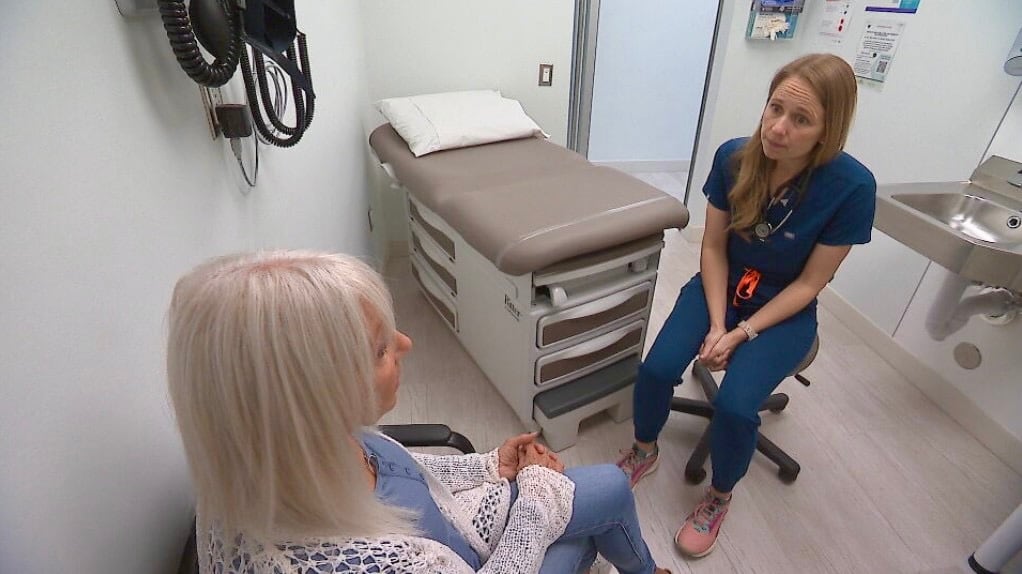
In the struggle to recruit family physicians, the Vancouver Island community of Colwood, B.C., had hit rock bottom. “Zero. That’s exactly the number of family doctors we had in Colwood,” said Mayor Doug Kobayashi. “That’s ridiculous for a city our size.” Health care is a provincial responsibility, so when Kobayashi was elected in 2022, he inherited a serious problem without an obvious municipal solution. But after speaking with doctors, he believed there could be a way to get around that. “We spent a lot of time in that first year just trying to figure out what the legalities were,” said Kobayashi. “I’ve had some former politicians tell me, ‘Oh, it’s against the Canada Health Act.’” Turns out it’s not, and Kobayashi’s team in the Victoria suburb developed a first-of-its-kind model to offer family doctors better work-life balance and to take running a practice off their plate. “They didn’t go to medical school to run a business,” Kobayashi said. How it works The city created a revenue-neutral model that brings physicians onto the municipal payroll alongside police officers and firefighters. The city pays the doctors a fixed-annual salary of approximately $280,000, plus benefits, a pension and paid vacation. Instead of running a private practice, doctors work out of a city-run clinic, with the municipality covering all overhead and administration. The city bills the province for patient care, similar to traditional fee-for-service clinics. The goal: let doctors focus solely on practicing medicine – a sales pitch that was simply too intriguing to resist for their first hire. “I get to come to work and practice medicine, and at the end of the day, I get to go home to my family and I don’t have to worry about balancing the books,” said Dr. Cassandra Stiller-Moldovan. Stiller-Moldovan relocated from London, Ont., where she practiced sports medicine. She says another added benefit are the benefits, themselves. “Physicians are private contractors – we don’t get sick pay. We don’t get maternity leave, our investments come from what we save ourselves, so it really does take quite a bit of planning and ensuring that you have a good financial team involved,” she said. So far, so good Stiller-Moldovan admits there have been growing pains and notes working under the municipal model won’t be for everyone. “I’m an employee, I’m not my own boss anymore, so I have to get approval for things like vacations and my conference time and those types of things,” she said. “People have to weigh what’s right for them and make that decision for themselves.” A second doctor is set to arrive next month from Colorado, and a third is expected to join the growing team in January, a team that immediately has no shortage of patients. “There are people here who haven’t seen a physician for, you know, eight to 10 years,” Stiller-Moldovan said. “They’ve had no preventative care.” She’s been on the job in Colwood since January and the response from patients, some of whom have spent years on waiting lists, has been joyful. “Many people have said they feel like they won the lottery when they got the phone call,” Stiller-Moldovan said. Colwood’s experiment may serve as a blueprint for other communities struggling to attract doctors, as the initiative is now drawing national attention. Kobayashi says his office has been fielding calls from across Canada, including four other municipalities.