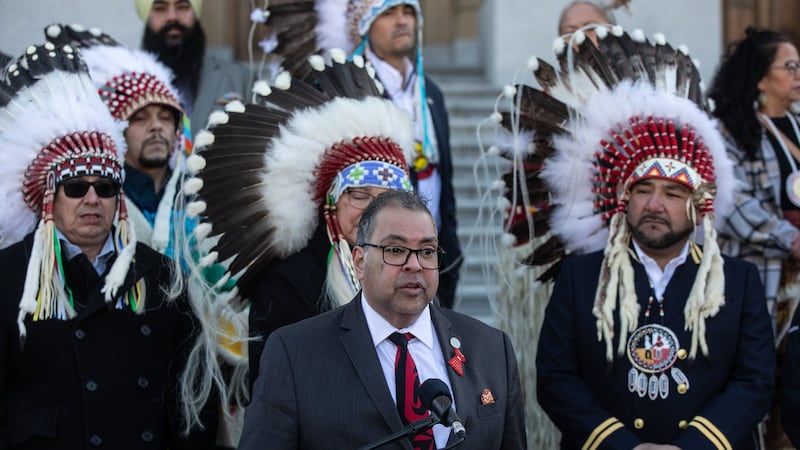
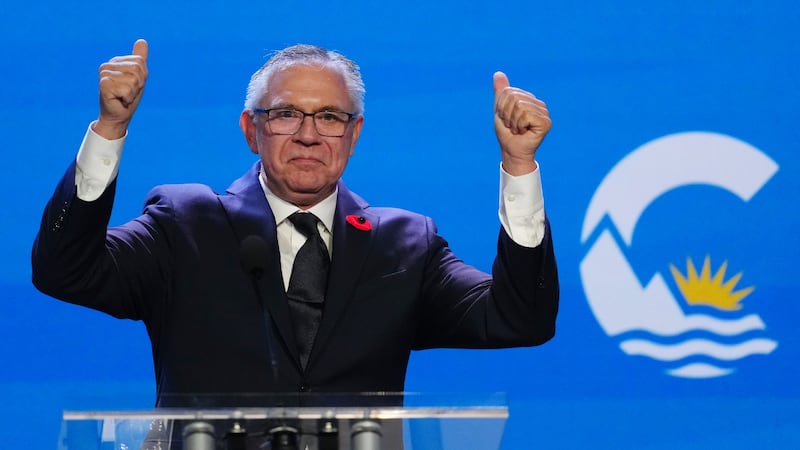
With a portion of Albertans’ property taxes set to rise this year, both mayors in Edmonton and Calgary say they’re tired of collecting taxes that don’t funnel directly back to their cities. The provincial budget, announced last week, increased the education levy to account for greater spending in school systems across Alberta. That levy is reflected in municipal property taxes. A portion of what Albertans pay as homeowners goes directly to the province as rates are assessed based on the value of your property. For Edmontonians, the average homeowner can expect a little more than a 13-per-cent increase to their taxes, translating to about $154 extra per year. In Calgary, that increase is closer to $340 per homeowner per year, which Mayor Jeromy Farkas noted in a post to social media Tuesday calling for a special meeting of his city council. He argued that Calgary councillors had worked to keep the municipal property tax increase to two-per-cent, but his constituents will still be subject to the city’s most drastic increase in history “because of the province.” “Let’s call this what it is. This is a form of equalization, a transfer payment taken from Calgary families and redirected elsewhere,” he said. Later that afternoon, he told CTV News that property tax increase doesn’t reflect any real-time investments into Calgary services. “About half of the property taxes that are collected here in Calgary go as a transfer payment to our provincial government up in Edmonton, and I’m going to continue to make the case for ensuring that as much investment as possible is made here in the city,” he said. Edmonton Mayor Andrew Knack said a drastic difference in each city’s average increases is a direct result of property value in Calgary compared to Edmonton. “At the end of the day, one of my important takeaways in this conversation is that the average single-family home in Calgary is about $200,000 more than the average single-family home in Edmonton,” he said in an interview Tuesday. While he says he understands the need to spend more on health care and education, Knack’s issue lies with what he says is mixed messaging and a “regressive taxation tool.” “If they need to increase funds for provincial services, of which education is one of them, they should be collecting that through their methods, which is income tax.” He explained that a property tax increase doesn’t account for when households face extenuating circumstances, like job loss, that make them lower income. “Those who are struggling the most will also feel the pain of that increase, instead of the province using income taxes, which allows people in lower incomes to not experience the same type of impact,” he said. Knack is calling for the province to stop using municipalities for property tax collection altogether and instead use income tax to fund provincial social services. “The cities and municipalities have to wear this increase when it’s actually not our responsibility, and we have no say in this process,” he added. Municipalities and other forms of taxation ABmunis, the group representing 264 of Alberta’s municipalities, said most homeowners could expect a 15-per-cent property tax increase across the province. In a statement to CTV News Edmonton, the group echoed Knack in explaining that property taxes can be particularly challenging for residents on fixed incomes or for families or businesses facing leaner times. “ABmunis is eager to reimagine property taxes and discuss how the provincial government’s fiscal framework could be improved to be more equitable and effect,” President Dylan Bressey said. “One way could be to have the provincial government collect its own property taxes while municipalities continue to collect theirs.” Finance Minister Nate Horner previously told reporters that his office has not considered a separate system for property tax collection. “I don’t really think it’s something that they should be asking for … we’re not going to create duplicate systems to collect these things. I don’t think they want us to collect all of their revenue on their behalf,” he said last week. “I would advise them, if they have a problem with that, when they’re giving their tax issuance out to their constituents to have a line item that makes it clear that this is because of the province.” While Horner says he remains clear on not changing methods of tax collection, he has suggested Alberta’s tax structure might benefit from a refresh. Premier Danielle Smith recently said adding a provincial sales tax, for example, would depend on whether citizens have an appetite for it. With files from CTV News Edmonton’s Jeremy Thompson