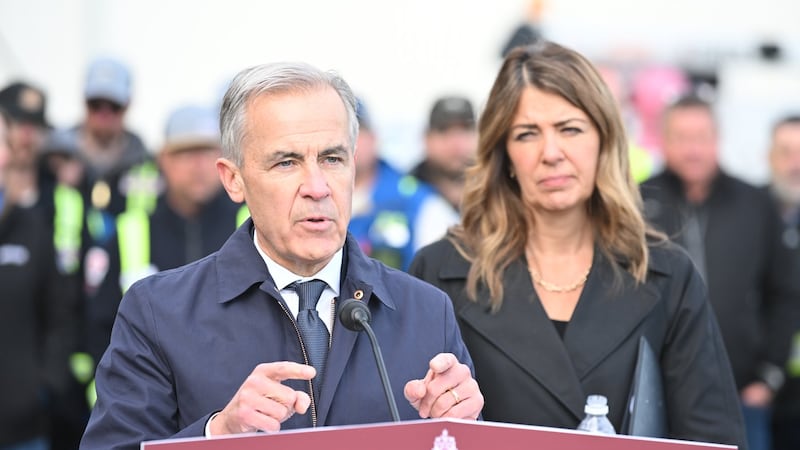
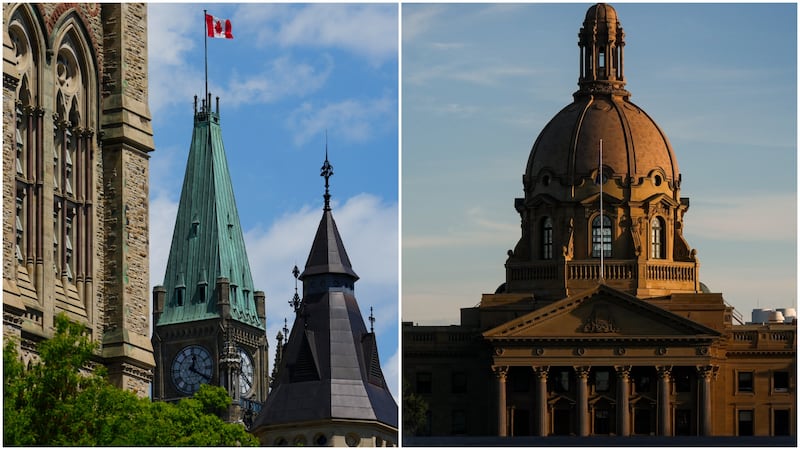
Advance polls for the Alberta referendum containing 10 questions opened Tuesday and go to Saturday. Senator Paula Simons joined Alberta Primetime’s Michael Higgins to discuss the referendum. This interview has been edited for length and clarity. Michael Higgins: You rose in the chamber one week ago today and you had a very distinct message, Alberta stands at a critical inflection point. How necessary is this referendum? Paula Simons: This referendum is entirely unnecessary. This is an expensive spirit and a waste of shame, as Shakespeare would have put it. Why are we doing this? We have sent a message to the entire investment community around the world that this is not a safe and stable place to invest. We have sent a message to our fellow Canadians, whose cooperation we need to build the projects that matter to this province, that we are not a reliable partner in Confederation. We have sent a message to Albertans who are disgruntled that, if you’re disgruntled, you can hold your breath until you turn blue, and you, too, could have a referendum on your pet issue. The only reason for this referendum is to placate the far right of the UCP base, and that is also a waste of time because those people will not be placated by anything. MH: Are Albertans sufficiently engaged to give this referendum the attention it demands? PS: This is what worries me. The people who want to vote to separate are very engaged. We are in an era in which, frankly, we don’t have the kind of strong daily newspapers we once had; we don’t, sorry to say, have the kind of strong nightly TV news watching that we once did. People watching this, you are special people, and I love you, but the majority of Albertans are not consuming news the way they used to. I see stories where people still don’t know that there are 10 questions on the referendum instead of just one. I’ve also had a couple of very frustrating conversations with progressive Albertans who said to me, ‘Oh, pshaw! I’m not going to vote at all. It just will encourage her, and it will just add legitimacy to this ridiculous process. So I’m staying home.’ I beg of you, if you are thinking that way, please do not. We need every person who cares about the future of this province and the future of this country to get to the polls. The advance polls opened today. I’m hoping that there will be a strong turnout at the advance polls, so that things on Monday might be a little less hectic. MH: When you rose in the chamber last week, you focused largely on the questions pertaining to immigration. What was your message to your fellow chamber members? PS: My message to my fellow chamber members and to my fellow Albertans is that Alberta is not having an immigration crisis; this is an imaginary construct. Immigration levels are so low that in the first quarter of this year, we actually had negative migration from international arrivals. More people left than came. Things have gone up a little bit, but Alberta is on track this year for less than two-per-cent growth, I think it’s 1.52 per cent. That’s the kind of growth lows that we haven’t seen since the pandemic, and in normal times since 2016, when there was a big oil bust. So the idea that we’re being overrun is nonsensical. The idea that we have some kind of fiscal crisis in this province that demands that we cut off services for refugees and newcomers is also imaginary. When the premier announced these questions, she was projecting a $9 billion deficit. Now we’re on track for a $2-billion-to-$3-billion surplus, so economic anxiety is also something that has evaporated. What I’m saying to my fellow Albertans is that we need immigrants in this province. We have 62,000 job vacancies in this province, even though we have the highest employment rate. We need immigrants not just to deliver our UPS packages and paint our nails, we need immigrants in our labs, we need immigrant entrepreneurs and engineers and tech geniuses who’ve come to the U of A and have then taken their projects and spun them off into hugely successful businesses. We need immigrants to come to conduct our symphonies and perform our surgeries. If our health-care system is under strain, and it undoubtedly is, imagine what would happen to our health-care system without immigrant nurses, without people who are taking your blood, without the X-ray technicians, without the doctors, without their skilled surgeons. Alberta’s secret success has always been that we’ve recruited the very best people from around the world, whether they were small business people or highly skilled professionals. Whether they wanted to work in the trades, whether they wanted to work in the service sector, this economy only runs because of the influx of labour. In a boom-and-bust economy, if you tell people, ‘Don’t come,’ guess what? When you really, really need them, they’re not coming back. MH: You’re at home in the province for the moment, but you’re spending a lot of time in the nation’s capital. How is this referendum being perceived outside of our provincial borders, especially around the question of separation? PS: What’s really interesting, and I find this somewhat disquieting, nobody in Ottawa appears to care. The Prime Minister’s office has been handling this just right. He hasn’t been bigfooting here, he hasn’t been lighting his hair on fire. I think the government has decided that they’re going to exercise quiet competence. They’re going to talk about a pipeline deal, they’re going to talk about this thing we just saw about major investment in the defence sector. But, on balance, when I talk to my fellow senators, some of them don’t know the referendum is happening. Despite my very best efforts to get people to care about this, when separatists say, ‘Oh, we need to vote for Option 2 to send a signal,’ my friends, the signal is not getting through. What people hear is, ‘Oh, Alberta, you’re the richest province. You’re getting a pipeline. Everything is good for you. What are you still on about?’ That’s not fair, because we have historic grievances and they are real. I’m not trying to say that Alberta hasn’t sometimes been the Rodney Dangerfield of Confederation. Sometimes people have taken us for granted, and sometimes, frankly, other provinces and governments have been happy to share in our resources and the economy flowing from them, while not respecting the work that Albertans do. But the way to solve those problems isn’t by pitching a fit, having a strop, or throwing a tantrum; the way is to step up and lead. We need to be leaders in Confederation the way we were in the days of Peter Lougheed and Ralph Klein and even Ernest Manning. The fact is, we have become so navel-gazing and so into letting our inner child cry, ‘Wah wah wah,’ when instead we should be saying, ‘We have the vision to take this country where it needs to go.’ That’s the Alberta I’m proud of, the Alberta that is tolerant, inclusive, smart and brave.