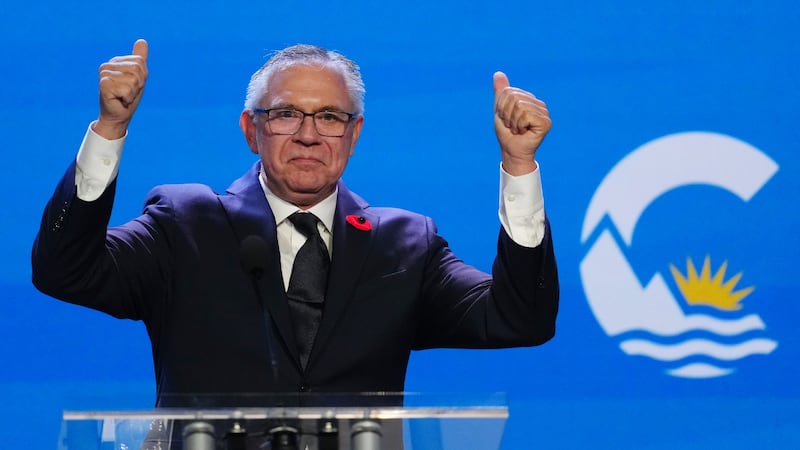
Both municipal parties that ran candidates in Edmonton’s October election say they intend to stick around. Better Edmonton and the Principled Accountable Coalition for Edmonton (PACE) have done a debrief post-election, according to their leadership, and have recalibrated their approach to the city’s future with municipal parties. The city election saw eight incumbent councillors return to their seats, including one who ran under the Better Edmonton banner, one of three races the party won. But Ward Nakota Isga Coun. Reed Clarke announced this week he would leave the Better Edmonton party and work as an independent. He told CTV News Edmonton the move was to give clarity to his supporters. “I’m going to be their voice and represent them, and there won’t be any kind of outside voices that will be influencing my decisions going forward,” he said on Wednesday. Two Better Edmonton councillors – Karen Principe and Michael Elliot – remain as the only party-affiliated members of city council. Better Edmonton co-founder Tim Cartmell finished second to Andrew Knack in the mayoral race, and no PACE candidates were elected. Doug Main, the co-founder of PACE, said that doesn’t mean the municipal party is disappearing altogether from the city. “We had one debrief meeting after the election, and our sense is … pretty much disappointed in the way the election turned out, but determined to carry on,” he told CTV News Edmonton on Wednesday. The plan for the party, he said, is to explore options like councillor report cards and political commentary as a way to stay involved in city council happenings. He added that, despite its lack of candidates voted into council, PACE as a group still accomplished a mission. “We did establish the validity of political parties,” Main said. “Political parties were able to consolidate messaging, bring people together in a team, advocate for a team approach to problem solving. We built a database.” Similarly, Better Edmonton’s chairperson Cameron Johnson said he felt even a few elected candidates was a “strong join for the first time,” considering they were able to raise over $1 million for 13 candidates. Johnson was recently appointed the chair of the party and replaced Alex Hryciw, who remains on the party’s board of directors. “We’ve regrouped … We feel like we’ve had some success, and now we have a lot of runway ahead of us that we can use to improve how we did in this election for the next one,” he said in an interview Wednesday. Better Edmonton’s goal now, Johnson said, is to fundraise and build up a war chest of sorts for the next election. He said people should expect political commentary from the party as well in the form of social and traditional media as well as policy statements. Political analyst Najib Jutt said the Better Edmonton party’s future would depend on how much of a role they’d like to play in commenting on council’s decisions, although he doesn’t blame them for sticking around. The PACE party, he added, is a different story given their lack of elected candidates, but could still remain a “legitimate option.” And whether the Better Edmonton party keeps up with holding council accountable, he said, will depend on their remaining councillors. “I’ve never seen anybody maintain it. They do have an opportunity to maintain it, because they do have two elected spokespeople. Then it’s just a matter of, do they have the infrastructure to do it? Because it’s a lot of work,” he said. In response to Clarke’s departure from the group, Johnson said the goal was never to whip votes and was not surprised “whatsoever” when the news dropped. “We are not trying to, you know, take over city council,” he said. “This is a table of 13 people sitting in council. They need to work together. “I know it’s up to them individually how they want to put their best foot forward. Reed (Clarke) felt like he needed to do that to be able to work.” In a statement to CTV News Edmonton, minister of municipal affairs Dan Williams said local parties are able to set their own internal rules and discipline, and a councillor’s decision to step down from a party is within their rights as they “ultimately remain accountable to the residents who elected them.” The minister added the province intends to keep legislation that allows for Calgary and Edmonton’s municipal parties. Work is currently underway to review the Local Authorities Election Act and whether any improvements are needed. With files from CTV News Edmonton’s Jeremy Thompson