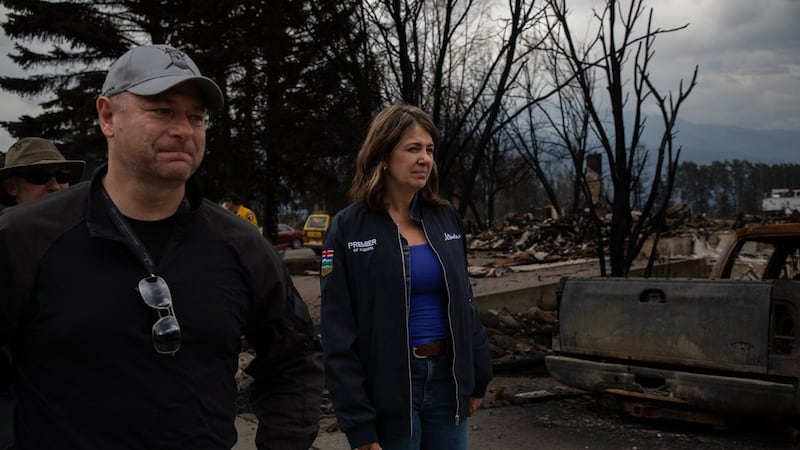
At least two-dozen structures are believed to have been destroyed by wildfire in northern Alberta, the chief of one of the evacuated communities says. Chief Andy Alook of Bigstone Cree Nation, which sits more than 300 kilometres north of Edmonton, announced the news to his members in a video posted to social media on Sunday. “Based on pictures shared by the firefighters that were in the community, we believe we have lost 27 structures, including the senior centre, the water treatment plant, the church and the Bigstone Health Centre,” he said. Alook said the information was based on the final assessment done by firefighters before they left the area on Thursday. Wildfire breached Chipewyan Lake around 8 p.m., just three hours after the community was evacuated. “Please keep in mind this is not a boots-on-the-ground assessment yet, an aerial assessment team was in Chipewyan Lake and will have a preliminary report along with photos for us [Monday.]” Alook added fire was so intense it destroyed fire protection hoses and equipment. Chipewyan Lake is part of the Slave Lake forest area, which contains nearly half of the out-of-control wildfires in Alberta. Several of the communities in the area have been evacuated, and the province says wildfire damage remains high. Rain over the weekend wasn’t enough to help and warm temperatures are expected to evaporate any surface moisture quickly. Yellowhead County evacuations Closer to Edmonton, residents in three communities in Yellowhead County will be able to return home on Tuesday starting at noon. Wade Williams, the county’s mayor, says firefighters managed to stop a fire burning near the hamlet of Peers at the railroad tracks at the edge of the hamlet. “I don’t know if people realize how close we came to losing the entire hamlet of Peers, but had the system we had in place not been in place, that hamlet was in huge trouble,” Williams said. Residents of Peers, as well as Robb and Mercoal, are being told to expect to see firefighting equipment still in the area when they return home later this week. “We are not out of this as of yet, but we have some breathing room for the moment. Crews will continue working these active fires for days to come, until they are completely out. “The fire hazard is high and the potential for new starts is high. Everyone in the county should have an evacuation plan,” Williams said. Swan Hills fire Meanwhile, residents of Swan Hills, Alta., can now apply for emergency evacuation payments from the province. The wildfire threatening the town is still burning out of control and firefighters are working to protect structures in the community. Additional firefighting resources from Yukon and the United States are on route to help fight the fire. The province says as of Monday, about 4,625 Albertans have been forced out of their homes due to wildfires. Alberta Premier Danielle Smith said firefighters who had been deployed to other regions have been recalled. “The wind has dramatically changed our situation in Alberta, we were able to provide resources to other communities. We’ve had to call them home,” she said after the premiers meeting in Saskatoon on Monday. “We went from having about 9,000 hectares burned last week to over 400,000 now we’ve got nearly 5000 people evacuated.” Smith says her government will restart its emergency management committee. “With so many communities facing evacuation, we’ve got to be able to respond in a way that is going to be rapid.” With files from CTV News Edmonton’s Nicole Lampa