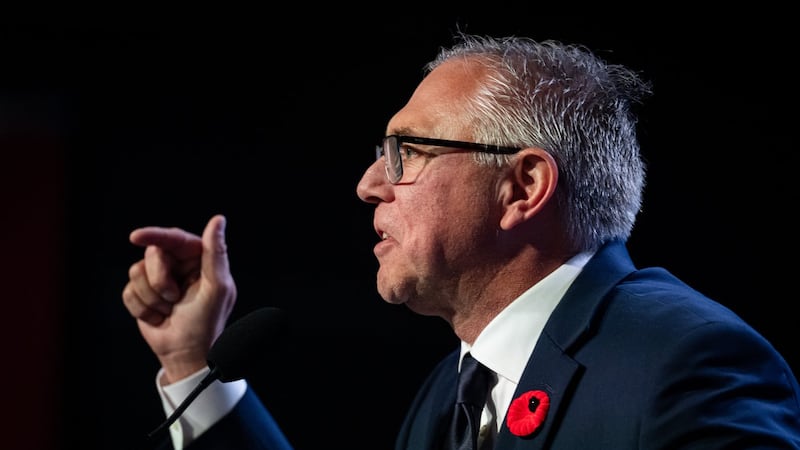
This Father’s Day, Azher Rubbani wants grieving dads to know there’s always space for their feelings. Rubbani lost his own son, Hashim, to stillbirth in April 2005. He can recall the day, but only a few moments stay truly vivid in his memory. “When he was born, it was the silence. It was deafening. They didn’t do a very good job of shielding us from other births, so in the background you have … happiness. Joy. The sound of a baby crying,” he said. “Yet our baby’s come out and there’s nothing. Emptiness. Hollowness.” After the trauma, Rubbani says he supported his wife and nearly immediately went back to “business as usual.” “I was brought up in an environment where a man doesn’t show weakness. You’re indoctrinated, you’re trained to say a man needs to be stoic. Weakness is not an option … You need to be steadfast. “All the leaning was towards the care of the mother, (which is) absolutely the right thing to do.” He said he didn’t feel comfortable sharing a mixed space with mothers who didn’t deserve to be overshadowed. So, he created StillDad – a writing-led, dad-first support space for fathers after child loss of any kind. Although he’s not a clinician, his program uses a framework he’s found helpful for both his own lived experiences and other fathers. He calls himself a grief guide. The group challenges men who have experienced child loss to lean into grief. That’s often done, he said, through a written framework inspired by his other teenaged son, who would write letters before coming to his parents with big feelings. He also uses the three-legged grief stool, which follows a recognizable pattern. Inform yourself about where you’re at in grieving, seek clinical tools, like therapy, and the leg he offers: non-clinical but meaningful support like art therapy, music or writing. StillDad offers sessions globally. Veloy Martinez, for example, joins sessions from Florida. His son was 23 years old when he died two years ago. He was hit by a car while skateboarding home. Martinez says he struggled to process the news. “I was hoping that it was incorrect. I had hoped that maybe he had been robbed … I had hoped that maybe things weren’t so good at mom’s, and he was faking something so that he could get away from her. Or maybe he owed somebody money. I don’t know. I was just hoping that it was something else,” he recalled. He says Rubbani’s curriculum, which he stumbled upon about eight months ago, has helped him find new outlets for coping. He’s also learning that it’s OK to enjoy the little moments. For him, that was being able to get in the car, think about his boy, have a cup of coffee and “not just be totally broken.” “I will say that going through this process, we’ve been given permission to still have joy … When you’re grieving, if you start to have fun, you feel like you’re almost letting down your person.” Rubbani says that feeling is commonly shared in his writing sessions. “How guilt takes over their life, their joy, their smile, their rest ... They feel it’s a betrayal towards their child, becuase they’re enjoying something, and this especially comes out,” he said. But he encourages fellow fathers to take a moment, especially this Father’s Day, to lean in to whatever feelings come out. “The stories are different, but what they actually desire, what they want is the same,” he said. “That safe space to be able to lay down their grief, and to share it with another father, another man where they don’t need to explain themselves.” With files from CTV News Edmonton’s Nahreman Issa