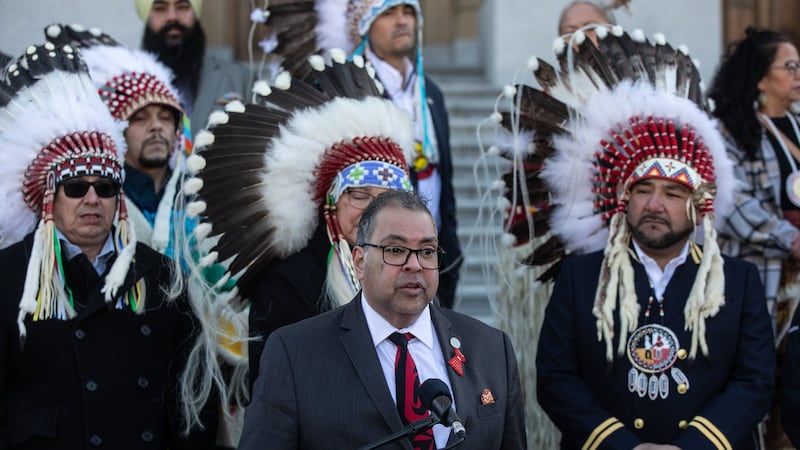
St. Albert commemorated the National Day for Truth and Reconciliation on Wednesday with a sea of orange walking to Mission Park. Hundreds came to buy goods from Indigenous artists and creators in what they call the “sharing of prosperity” on a day the nation took to reflect and remember those who survived residential schools and those who never made it back home. “It’s not a day off. It’s a day to continue learning, or start learning,” Indigenous Relations Coordinator Samantha Atkinson said. “Everyone here wants people to be in this space to understand why it’s an important day. It’s not just a day to stay at home.” The city, which borders Edmonton to the north, was one of many marking the day. The National Day for Truth and Reconciliation began as a call to action to the federal government by The Truth and Reconciliation Commission to create a statutory holiday recognizing residential school survivors, their families and communities in the wake of malnutrition, culture erasure and abuse. Bill C-5 established Sept. 30 as the National Day for Truth and Reconciliation in 2021. Orange Shirt Day – Every Child Matters, a grassroots movement dating back to 2013 in Williams Lake, B.C., is also commemorated in conjunction with the federal day. The orange shirt symbolizes the loss of culture, freedom and self-esteem that Indigenous children experienced throughout Canada’s history. In the capital city, which is home to the second-largest Indigenous population behind Winnipeg, the Bent Arrow Society was engaging attendees with ways to recognize the event with more than an orange shirt. The organization supports the mental, emotional and spiritual wellbeing of Indigenous youth and families. They packed the Parkdale School gym with orange shirts, but organizers say the most important element is listening and learning. “We want people to understand that we’re still recovering from that, still healing from that, and to have some understanding about the connection to come of the struggles Indigenous people have today,” Bent Arrow executive director Cheryl Whiskeyjack said on Wednesday. Whiskeyjack says she feels some of the injustices of church-run residential schools – which are estimated to have taken more than 150,000 Indigenous youth between 1857 and 1996 – are not widely known enough. A National Day for Truth and Reconciliation event hosted by the Edmonton Short Film Festival at Audrey’s Books aimed to intimately share Indigenous stories. The goal, organizers said, was to reach people through the medium of film. Terry Lusty, a Métis Elder with an honorary doctorate from Athabasca University, spoke between documentary screenings of the lesser discussed aspects of abuse he faced during his eight years at a residential school. “Glasses, hearing, dental were things that we never had taken care of in the residential school I was in … I know darn well I needed them,” he said. “It’s a process that has been long overdue, and it doesn’t help when we have people in society living in denial, who don’t want to hear the truth. That’s one of our biggest barriers and hurdles to get over … The only way we’re going to achieve anything worthwhile down the road is if we come together in a unified manner.” The National Residential School Crisis Line is a toll-free, 24-hour support and crisis referral service for former residential school students and their families. It can be reached at 1-866-925-4419. With files from CTV News Edmonton’s Noah Rishaug