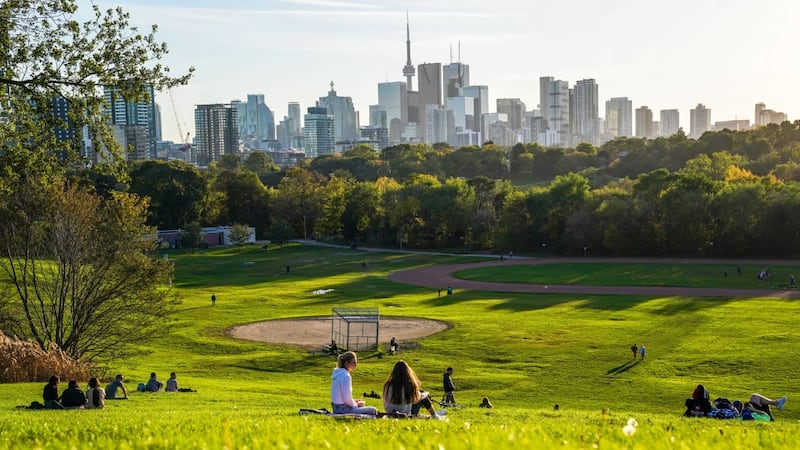
A report from the University of Alberta has found a connection between the quality of life of people with chronic obstructive pulmonary disease (COPD) and their natural environment. According to the U of A, health risks for people with COPD increase for those who live in high-pollution areas or farther than 500 metres from green space or water. COPD causes obstructed airflow from the lungs and makes it hard to breathe. More than two million Canadians aged 35 and older were living with diagnosed COPD in 2012 to 2013, according to the Public Health Agency of Canada. It is expected to be the second-most predominant illness in the world by 2030. Both the U of A and Barcelona Institute for Global Health (ISGlobal) evaluated the distinction between environmental factors and the disease in 400 patients living in Barcelona, Spain and its nearby provinces. Researchers looked at the exposure of patients to air pollutants, traffic noise, land-surface temperatures, and how far the person lived from green or blue spaces such as parks and rivers. “If you spend time in any blue or green space — like in the forest, a park or near to the ocean or to a river — it gives immense benefit to mental health,” Subhabrata Moitra, the first author on the study for the U of A, explained. “If you have access to those places, then you’re more likely to achieve better physical activity by walking or jogging, and this also helps in improving one’s physical and mental health.” According to researchers, land-surface temperature and noise pollution were not found to have an impact, however, there are “factors” that need to be further investigated. Moitra noted the findings explore the importance of more in-depth urban planning for cities to include better access to “clean air” and outdoor spaces. “A large part of the population is living with COPD,” he said. “If we are able to provide a clean and green environment to those patients, that will help in improving their quality of life.”