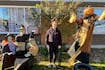
Red. Yellow. Green. Go, go go! These cars might not reach the same top speeds as NASCAR vehicles but for these little drivers, it’s an exhilarating time nonetheless. Volunteers spent their morning at the Glenora Community Hall, turned automotive factory for the day, assembling 17 custom new sets of wheels for children with disabilities. Through the Go Baby Go program with Variety - the Children’s Charity of Alberta, kids get adapted cars that offer some extra freedom and fun. “This programme is really cool because it gets kids out of their wheelchairs into a car that looks cool,” said Maya Wynckers, with Variety. “Then (they’re) not as stigmatized, and other kids, when they’re out and about, they think, ‘Oh wow, cool, it’s a super cool car,’ and they want to engage. “A lot of times, when kids are in wheelchairs, (other) kids are afraid and they don’t really want to engage because it’s unknown to them.” Since 2019, more than 400 cars have been gifted to families. The cars can be suited for kids aged one-and-a-half to 12 years old. Taylor Bell’s daughter Mylah, who was diagnosed with Rubenstein-Taybi Syndrome, is one of the kids receiving a car this time around and the family is “really excited.” “It’s so special. We got Mylah’s diagnosis super young, about six months old,” Bell said. “There’s been so many hard days in her journey and in our journey with her, and to have something like this, that’s so rewarding and so fun for her … it’s an amazing day. We love it so much.” Being unable to walk yet, Bell says the car will be a great help for the nearly three-year-old. Scott Little, one of the volunteers Wednesday, was helping assemble Mylah’s car. His own daughter knows Mylah and received a car last spring. “She loves driving around the yard and it gives her a little bit of independence aside from getting carried around by us,” Little said. “Me and my wife have been wanting to give back, so this was a good opportunity.” Some of the adaptations built into the car are “crazy,” like the brain computer interface, according to Wynckers. “We can actually connect a car to a system that translates through your brain to get it to go,” she said. “The kid just has to think, ‘Go go go,’ and then it will actually move the car.” Other modifications include upper body support and stabilizers, as well as push-to-go buttons for those with limited lower- and upper-body mobility. “I hope that more people out there see this and apply for their kids that have mobility issues because it’s just so rewarding,” Bell said. The program is free for families. More information is available online. With files from CTV News Edmonton’s Noah Rishaug