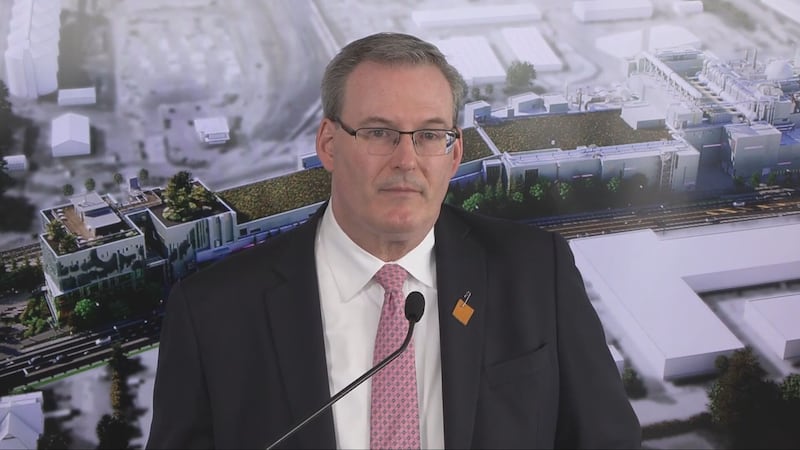
Edmonton’s police organization made some changes in 2025, including the naming of a new police chief, Warren Driechel, in the fall. Driechel assumed command of the Edmonton Police Service (EPS) on Sept. 19, becoming the 24th chief of the EPS and the first member of the service to become chief in more than 20 years. He began his Edmonton policing career in 1997 and has worked among organized crime and gang units in the past. While he’s still settling into his new role, Driechel sat down with CTV News Edmonton to discuss his priorities for the new year. He says his transition into leadership has been an exciting time – although being the face of a police department for a city of 1.2 million comes with its demands. Certain controversies as an Edmonton police officer were spotlighted when news first broke that he would become chief, including an EPS steroid scandal. “It’s definitely challenging … the pace is blistering,” he said in an interview last month. “I didn’t go into (this) with my eyes shut, I knew who I was and the criticisms or thoughts about me, and you just have to be prepared for that personally.” Trends in Edmonton crime After 30 years with the EPS, he said he was hesitant to take on the top job, but he’s excited to be part of what he hopes will be a transformative period for the service. “I think as an organization, we need to grow and mature, and now I have that opportunity to lead that change, and I find that very exciting,” he said. To him, growth would mean looking outside the traditional methods police use for crime reporting and investigation, looking at different approaches that may help “reduce demand on the front lines.” Driechel says he’d like to explore the use of virtual technology, including virtual investigations, online reporting methods and use of facial recognition software. Even writing reports, he said, could be streamlined with AI use. “If we can save an hour of time for a member every day, that’s one hour we can get back by having them present, visible in the community,” he said. Public safety has been a burgeoning topic for many Edmontonians in the last year. Although Edmonton crime rates dropped slightly in 2024, Driechel says police noted an increase in organized and violent crime in 2025 – including more youth involvement in gangs around the city. Infill development fires and other instances of arson were also straining police investigation resources in 2025, Driechel said. “We see these more complicated investigations or complex investigations come out, like Project Gaslight … significant effort goes into that. In a rapidly growing, diverse population, these crimes come in, and we have to respond to it.” Project Gaslight was an extortion scheme that would ultimately end in the burning of 12 properties under construction owned by South Asian homebuilders. EPS arrested and charged several suspects in 2024, one of whom is now behind bars, but warned the public in July of this year that extortions and arsons of a similar nature were resurging. “It’s not just one-offs. There’s series and trends,” Driechel reflected. He also said Edmonton has a “unique kind” of opiate issues, meaning drug-related crimes are another complex part of the job and are putting pressure on all first responders. “That’s a challenge for us, because now we are often intervening in not just crime issues, but health issues,” he said. Traffic safety and control is also at the top of his mind. A 2025 city report shows traffic deaths climbing in recent years, reaching 31 as of November. “The city’s growing, there’s a lot more pressure on these roadways and infrastructure, so you got a lot more traffic, so you have more of a statistical chance of collisions occurring,” he explained. Speed and alcohol have also been considered factors in some of the deaths this year, and Driechel said the city’s move to potentially reinstate speed enforcement might be worthwhile. “The challenge always is, it’s just always seen as an enforcement police issue. I think there’s a lot of other things that can be done in terms of education, traffic calming measures,” he added. City council, funding and hopes for the new year Driechel noted that all his concerns for crime and public disorder in Edmonton are intricately linked with how the city itself responds to stressors like rapid population growth. “The cost of policing, the demands on policing continue to increase, but there’s no infinite bucket of money to pay for these things. And with a growing city like Edmonton, we aren’t the only ones asking for money,” he said. That’s why he says he’s determined to keep up communication with city council and Crown prosecutors – with whom the EPS can sometimes have some turbulence. But Driechel said he’s worked closely with city council before on shared concerns around encampment response, transit safety, public spaces and more, and plans to make the organization’s priorities clear to councillors. “I think a lot of times my role was trying to create understanding, recognize the challenges that they’re facing in terms of budget and other competing priorities, then also ensuring that they’re hearing the things that we’re doing,” he said of his work with city officials. And while he has what he describes as bold ambitions for strengthening police services and increasing officer visibility in neighbourhoods across the city, he said he’s realistic about change taking time. “I’d like to improve the service that we’re delivering on … I would like to see us reduce some of these statistical anomalies, especially in property crime we’re seeing,” he said. “Another thing I’d like to see us change in 2026 is that people start to feel safe again in their community.” With files from CTV News Edmonton’s Geoff Hastings