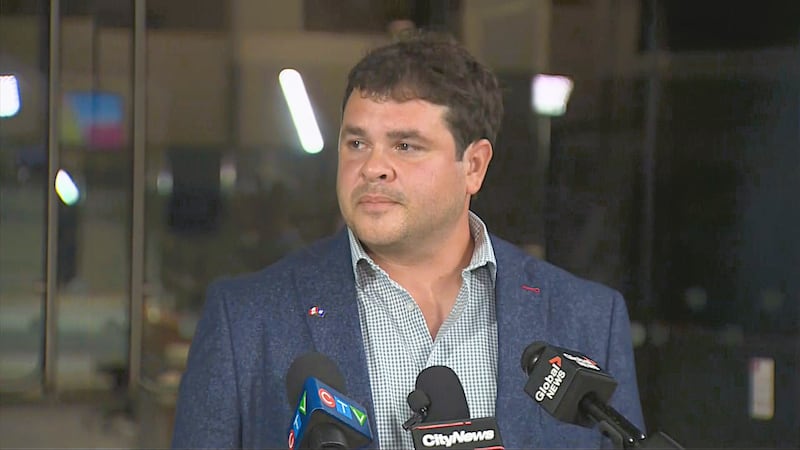
The Canadian Red Cross has teamed up with a Canadian company to distribute potentially life-saving devices across the country. In November, the organization began selling medical information tags created by Steve Reed in Ontario. Containing information like blood type, date of birth, organ donor, allergies, medical history, and emergency contact information, the tags are both water and tear proof and have been cleared to be adhered to sports and road safety helmets. Their purpose is to provide first responders with immediate access to details that could inform an emergency treatment plan. “Often, if the person doesn’t have any information with them, then (emergency responders) have to wait for the person to be conscious or next of kin or family to be able to share with them if the person has any medical conditions,” Red Cross spokesperson Kevin Paes told CTV News Edmonton in a recent interview. They see an endless number of applications: children’s car seats and backpacks, workplace hard hats, mobility aids like wheelchairs and walkers, recreational sports gear. According to Reed, 15 in 10,000 beer league hockey players have a heart attack at the arena or while playing hockey. The injury rate is higher when considering fractures, concussions and other injuries. “The guy next to you may know that your daughter’s at university and you like to drink Bud Light, but they don’t know your blood type. They don’t know who your wife is and how to get a hold of her,” Reed said. The device received the Prince Michael International Road Safety Award in 2021. In recent years, Reed has sold the product to school boards in the U.S., oil companies, and construction companies. The Edmonton Motorcycle Road Racing Association mandated the tags more than a decade ago. Racer and OnTrack Performance Race School instructor Justin Knapik had a tag on his own helmet when he crashed his motorcycle during a competition in 2024. “I was conscious when I was in the ambulance, I was able to answer questions, but I wasn’t very coherent,” he recalled. Also a firefighter, Knapik sees the usefulness outside of his sport. “When I show up on a medical call, I’m always trying to gather up any of the statistics and the information that I can of any of our patients,” he said. “One of the really brilliant things about this is that it doesn’t take up any space… It is something that is visible, but it doesn’t interfere with anything. It’s lightweight.” A portion of proceeds from each sale through the Canadian Red Cross and Amazon goes back to the Canadian Red Cross. With files from CTV News Edmonton’s Amanda Anderson and Evan Klippenstein