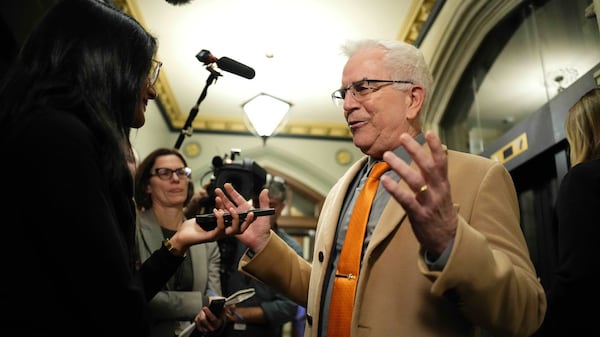
As the Alberta government rolls out its triage liaison program in several hospitals across the province, Alberta Primetime’s Michael Higgins sits down with Dr. Braden Manns, a professor of medicine and health economics at the University of Calgary, to discuss what this will mean for overcrowded emergency rooms. This interview has been edited for length and clarity. Michael Higgins: Let’s start on the implementation of triage liaison physicians in six hospitals. It’s taken several months to get this up and running. How far does this go to being a permanent solution to overcrowded emergency rooms and long patient wait times? Dr. Braden Manns: Unfortunately, it’s not a solution at all. It’s a Band-Aid. Unfortunately, the reason we have ER gridlock, the reason Mr. Sreekumar wasn’t able to get in the emergency room, is because–let’s just take that hospital that day. There were about 60 stretchers that have nurse-staffed stretchers, and about 55 of them were full with patients. And that’s kind of what we’re seeing in the big urban emergency rooms, and that’s the cause of gridlock. So if you only have five beds for people in the waiting room, this makes impossible decisions for the triage nurse. The solution isn’t an emergency room doctor going out to the triage room. Maybe you get tiny gains with that. The solution is more hospital beds, more long-term care beds, so admitted patients can move out of the emergency room into the ward, allowing those waiting room patients to come in. MH: How challenging will it be, regardless of gains? How challenging will it be to staff these positions, or is this something ER physicians will likely line up for? BM: I heard ER physicians aren’t particularly happy about this. They’re already struggling to fill out their rotor of regular shifts. This is taking from the same pool, and actually, the urgent care centres will take from the same pool. For older doctors like me, do I really want to work in the middle of the night, or would I rather work in an urgent care centre seeing the less sick patients? Urgent care centres often close at 10 p.m. I know the minister was asked about that. It’s not just about building urgent cares–and those are still about six years away. It’s about staffing them, and we don’t have a good plan for that. MH: You bring up the urgent care centres in an announcement this week to expand or to plan for nine more. Another measure the government suggests will ease pressure on emergency rooms, suggesting redirection of about 300,000 ER visits annually. How far does that go to this being a replacement for actual hospitals? BM: I’m happy with any announcement in the health care area. I’m happy with any planning. This is sort of a re-announcement. It doesn’t add much in the way of funding. It says they’re going to start getting some land. The problem is it’s not looking at the system as a whole. Yes, a third of people in the emergency room end up there because there’s nowhere else for them to go, but comprehensive primary care, for instance, if we mandated or incentivized primary care practices to work together and have one practice open at night with access to labs and stuff, that’s another option as well. Certainly, the types of patients that need to be in the emergency room can’t really be dealt with in primary care or in urgent care centres. If you’re having a stroke or if you’ve got a trauma, those types of things you see on the TV show ER, you need to be in the emergency room. We’re not really expanding capacity for that. It’s helpful when your primary care doctor’s office is closed, but we should be building capacity in primary care instead. MH: Edmontonians were promised, at one point, a hospital on the south side of the city. The current United Conservative Party government cancelled it two years ago. There will apparently be one of these urgent care centres in this part of the city. Will it serve the community the way they need to be served? BM: No, unfortunately. When you look at a comparison with other OECD (Organization for Economic Co-operation and Development) countries – countries similar to us in Europe and elsewhere – we’re in about the bottom 10 of 35 countries in terms of beds per capita. That south Edmonton hospital would have been opening now with about 450 beds. So again, we don’t need to double our bed capacity, but in the areas like the Edmonton urban hospitals, maybe around the Foothills Medical Centre, the Peter Lougheed Hospital, we do need more beds. Maybe 50 to 100 beds per hospital. We looked at this three to four years ago when I was working in Alberta Health Services. You don’t need a ton, but you need to be able to decant patients out of the emergency room into the hospital, and that also means getting that 15 to 20 per cent of beds for which patients are sort of stuck in there. They need andy want to be elsewhere, but there’s nowhere else for them to go, whether it’s services at home they need or whether it’s long-term care beds. Again, these are Band-Aid solutions. They’re not looking at the system as a whole.