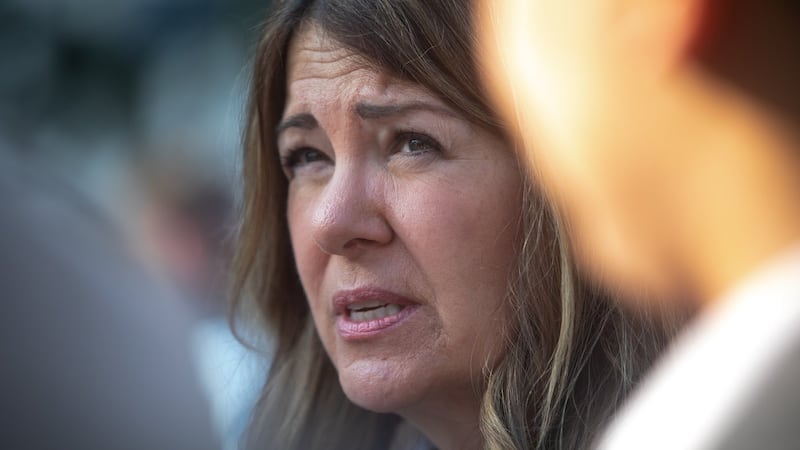
Amid calls for an end to for-profit seniors’ care, and ongoing collective bargaining between numerous operators and thousands of workers in the continuing care sector, the Alberta Union of Provincial Employees is considering strike action. AUPE president Sandra Azocar discusses this with Alberta Primetime host Michael Higgins. This length has been edited for length and clarity. Michael Higgins: Why is now the time to threaten strike action? Sandra Azocar: We actually have been at the bargaining table with quite a few of these operators, in some instances, since 2022, so our workers have been working without a contract, without wage increases, without any kind of validation for the work that they do for a very long time, and and they’ve had enough. They’ve had enough of the disrespect when we have employers that come back with offers of zeros, you know, for ’22, ’23, ’24, and then one-per cent increases. And the majority of the 157 (groups) that are currently bargaining are coming back with similar offers. MH: You’re accusing for-profit providers of corporate greed. So, what’s at play, especially where the collective bargaining is concerned? SA: We have employers that don’t recognize that seniors’ care is health care and value the work that our members do as such. Continued care in this province has become a hospitality industry. It has become a way for these companies to build their real estate empire. When you do corporate searches on all these companies, that’s what they do. What a great way to make money from people that need the care and and depend on the care that they need. When you live in facilities that provide care, it becomes health care, and it’s unfortunate that in this province, what has happened is that when seniors depend on that care, they become second-class citizens, and they have to pay for what they need, for the health care they need. MH: Are there provincial funds there? Why are you not able to reach a deal and get what your members are looking for? SA: What we’re seeing in this round of bargaining is operators blaming the government for lack of funding security, and then the government saying we give these companies money. But that money is not carrying over into staffing and care. We hear all the time about staff, for example, having to buy personal items for seniors that don’t have any family members. There’s all kinds of gaps that have been created by the lack of transparency that we see in how the money is allocated. The government gives these operators money, and yet sometimes it doesn’t reflect into making sure that the working conditions translate into appropriate care conditions. MH: How does the provincial government factor into this conversation? SA: The provincial government is the one that provides the funding, depending on the size of the facility and complexity of care that the facility provides, and they provide funding to ensure that seniors are actually getting the care that they need. What we call the general support services – those people that work in housekeeping, those people that work in the kitchen, anybody else that does not provide nursing care – are at the mercy of accommodation charges. In this province, these accommodation charges have become increasingly unaffordable to quite a few seniors. When you’re paying anywhere between $8,000 to $10,000 a month for care, it becomes a situation where people that can afford it can get into these facilities, and those that can’t have to wait for facilities that they can afford, and most of them are are the ones that are subsidised by the government, and you would see that in long-term care facilities. MH: Strike action was narrowly avoided last year. What needs to happen now? SA: These for-profit providers and not-for-profit providers need to come to the table with offers that will recognize the value of the work that our members do. There’s no way that you can have this type of work where you’re consistently understaffed, consistently underresourced, and then be kept with these low wages that don’t allow you to be able to feed, clothe, or sustain your family. The majority of our members are having to have two or three jobs just to make ends meet. It doesn’t make sense for recruitment and retention, and our members have had enough, and they’re willing to take this fight to the street because they can’t continue. It’s not sustainable anymore for them to show up every day because they care about the residents, but yet are not recognised for the value of the work that they do. MH: How soon could strike action happen? SA: We are at some tables that are for sure heating up. Age care is one of them. We would be in a strike position in November. There are some others that are moving faster than others, and so what we’re saying is that we want to put these operators on notice that our union is ready to support our workers in standing up for what is fair and for what they deserve. I can’t reinforce enough that working conditions are care conditions, and if these operators don’t recognize that, then they’re doing not only a disservice to the workers that provide the services that make their operations work, and also more importantly to the seniors that deserve the care that they need.