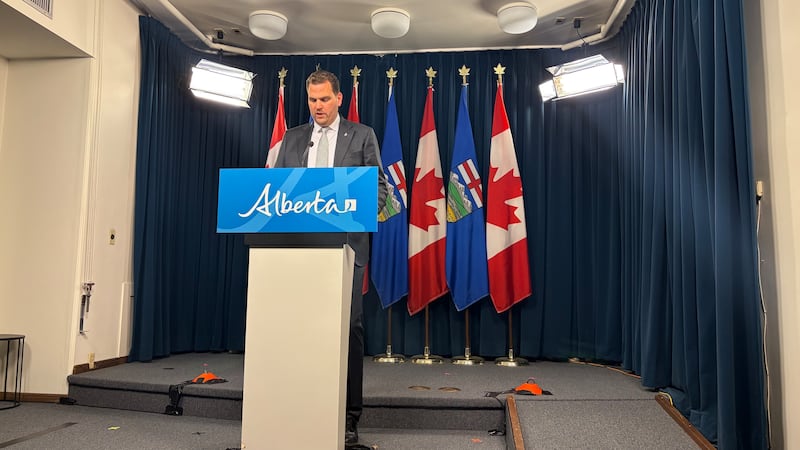
Calls are being made for an independent public inquiry into the alleged data breach of nearly three million Alberta voters involving the separatist group called the Centurion Project. Professor of political science at the University of Alberta Jared Wesley joins Alberta Primetime’s Michael Higgins to discuss why he believes an urgent inquiry is needed. This interview has been edited for clarity and length. Michael Higgins: You’re suggesting that an independent public inquiry needs to be called right now. Why would the government engage in that when the premier pointed out that there are investigations underway by police and Elections Alberta? Jared Wesley: A public inquiry doesn’t prevent the police from investigating and it doesn’t prevent Elections Alberta from completing its required investigation, as well. But those investigations are going to take a very long time and are held to a much higher standard than I think is necessary to prove accountability in this case. In the case of Elections Alberta, through no fault of their own, they’ve become part of this scandal. So there are questions that remain as to what they knew, when they knew it, whether they should have investigated earlier, and why they chose not to, that they can’t answer themselves. All of this and a bunch of other questions remain unanswered and cast a huge cloud of doubt and suspicion around what could be the most important vote that Albertans have cast. MH: To what degree would it establish malfeasance? JW: It very well could. With the power to compel witnesses, to compel documents, to call experts that can testify to the potential implications of this data breach, not just for Albertans privacy which I think is paramount here, but also whether the data has fallen into the hands of foreign actors who may be using it to influence our elections and referendums. These are all important considerations that Albertans need to know about. It shouldn’t be just discussed behind closed doors with much of the information never released to the public. Albertans deserve to know the answers to this so they can, if they’re going to participate in a vote, cast their vote in a meaningful and informed way. MH: If time is of the essence, why not act on the Opposition’s call for the chief electoral officer to testify before the standing committee on legislative offices? JW: Again, a public inquiry wouldn’t preclude that from happening, too. The good example here is the Gomery inquiry. We looked into the sponsorship scandal that happened as part of another independence referendum in Quebec back in 1995 and in that case, there were multiple concurrent investigations that revealed bits and pieces of information that fed their way into a national inquiry. There’s no reason why we can’t do all of these things. I would say that a legislative committee is likely to throw this into the realm of political and partisan theatre. I’m not sure whether hauling the chief electoral officer in front of a body like that, where his judgment will be subject to partisan framing, is necessarily the best thing for us in this situation. MH: To what degree do you see responsibility resting on the shoulders of the (Danielle) Smith government? JW: There certainly is a case to be made that they’ve made it harder for Elections Alberta to investigate. The chief electoral officer has said we might have investigated earlier, were it not for the change in the standard that we had to meet in order to launch an investigation. We also know that Elections Alberta is massively under-resourced and doesn’t have the ability to track down all of these leads while simultaneously preparing for nine referendums in the fall. I’m not here to lay fault on Elections Alberta, but I think Albertans have real questions that need to be answered. I’m sure the chief electoral officer would agree that that information should be made public. MH: I think it’s safe to say most Albertans are concerned about the degree of risk involved here. Should there be an expectation of the already identified parties shouldering some responsibility like footing the bill for free, credit monitoring, fraud assistance if somebody runs into trouble? JW: Last time a data breach of this magnitude happened with using public data was the student loan data fiasco. There was some credit protection support offered to folks that could certainly be forthcoming. I also suspect that there’ll be a class action lawsuit against the Centurion Project and probably all of those folks that were involved in leaking this information, and rightly so. A lot of these folks that are involved in organizations like the Centurion Project get into it, not just for political reasons, but there’s a lot of money to be made and a lot of fundraising that can be done around causes like this. Until we start to see financial penalties to deter folks from engaging in this kind of illicit activity, it probably will continue. MH: Where do you see this leaving the status of the Stay Free Alberta petition that was delivered on Monday to Elections Alberta? JW: I don’t think there’s anybody in Alberta that stands to gain more from having a full independent public inquiry than the Stay Free Alberta folks who would be leading the leave campaign in a prospective referendum. They’re already seeing and talking about it on social media, about how they’re facing all kinds of backlash from within their own movement and from folks that they’re trying to reach out to convince to vote for separation, because they feel like they’ve been cheated. They feel like the system has been gamed. They feel like the sudden announcement of 300,000 signatures is suspect. They worry that the money that they’ve dedicated to the project may go up in smoke in the form of civil suits and so on. So if they want to clear the air, they should be falling behind this call for a public inquiry more than anybody else. MH: Whether it’s a public inquiry, or that in combination with the investigations by police and Elections Alberta, what is the likelihood that any of that can be completed before a referendum on October 19 or the next general election? JW: It’s highly unlikely that a police investigation would be done before the next election, let alone the next set of referendums in the fall. It’s also highly unlikely that Elections Alberta will get to the bottom of this issue with their powers and their resources before we all head to the polls in October, whether we’re voting on this particular issue or not. My recommendation is that we push pause on this. We actually take the time to get to the bottom of it because this issue will be on the minds of voters when they trot out to the polls. MH: Do you mean either voting in a referendum or in 18 months, going to the polls and voting in a general election? JW: I think we need answers before we cast another single ballot in this province because this issue will be on people’s minds when they trot out to the polls, regardless of what the question is. They’re going to be wondering, even if they should choose to go at all because a lot of people have lost faith in the voters list, in the voting process, and they’re worried about their own privacy as part of this. But if they do, they’re going to be thinking about this. So the question is, do we want to leave innuendo and insinuations as the foundations of their decisions? Or do we want to have evidence that’s backed up by a public inquiry? I think the latter is the better course of action.