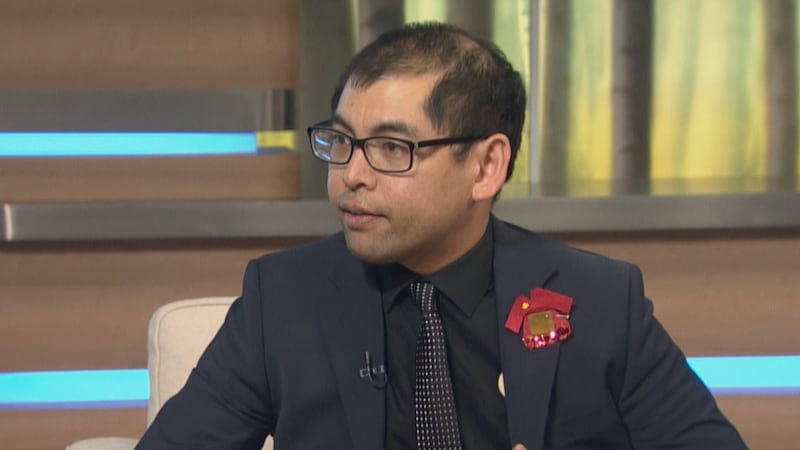
Grande Prairie teacher and former lead negotiator for the Alberta Teachers’ Association Peter MacKay joins Alberta Primetime host Michael Higgins to discuss the third week of the teachers’ strike. This interview has been edited for length and clarity. Michael Higgins: What’s preventing the resumption of bargaining as you see it? Peter MacKay: Honestly, I think this lies entirely with the province. Teachers have been very clear that we need some kind of a remedy for the years of underfunding. We’ve been the least funded for the better part of 10 years in the entire country. That, along with an influx of new students into the province, has left us with classroom conditions that are just out of control - in particular with class sizes and class complexity in many places, especially in our cities. It affects everyone across the province, and there needs to be some remedies. The government won’t even commit to counting class sizes, which indicates to me that they are not taking this seriously. MH: The government sent a letter proposing “enhanced mediation”. How has that landed with teachers? PM: It seems like kind of an Orwellian use of the word enhanced. By enhanced, it seems like they’re taking things off the table that we can no longer talk about, or that can’t be spoken about in the mediation process. That doesn’t seem like an enhancement, that seems like a limitation, and the government seems adamant that that’s the only type of mediation they’re willing to engage in. I don’t think teachers are in any way interested in that. We want to have open negotiations where we can talk about the issues as we see them. We have not walked away from the table. My understanding is that it was teachers who put a proposal on the table and the government responded with this offer of - as they call it- enhanced mediation. Now we’re just in a stare down. And we’ve got three quarters of a million students waiting for the government to move. MH: Why would a cap on class sizes be needed when the government has committed to hiring 3,000 more teachers, another 1,500 education assistants, and promising to follow through on construction of more schools? PM: Everyone understands that any kind of improvement in terms of class conditions would require hiring. The government’s not wrong in that regard. We’re certainly not opposed to the idea of hiring, and we recognize that hiring is a necessary first step here. But the absolute opposition to even talk about the goal of that hiring and trying to reach a place where teachers can teach effectively, where students can learn effectively, we have to be able to talk about the classroom conditions. The extent to which complexity and the number of special needs students in the classroom, and the number of bodies in the classroom, has gotten completely out of control. The fact they will not talk about it is extremely frustrating for myself, and I think for many teachers across this province. MH: What kind of a difference is there in working conditions when you compare the rural education dynamic with what teachers face in the larger urban centres? PM: There are difficulties in both. I grew up in rural Alberta. I taught much of my career in rural Alberta. I’m in Grand Prairie now. One of the problems in rural Alberta is attracting teachers, first of all. Another problem is that rural Alberta is kind of shrinking as a percentage of population. What you end up with is multi-graded classrooms. I teach a split. I knew one person who was teaching 11 different curricula in a single classroom, which is almost impossible to do. It wasn’t a very large number of students, as I recall. I think the person said they had 16 or 17 students. I’m not sure how you’re supposed to do anything but shuffle back and forth and touch base for a couple of minutes with each student. So rural Alberta has its own problems with sort of what I would call curricular complexity. My daughter teaches in Calgary, and I know several of her friends, and the large centres, Edmonton and Calgary and communities around each, those folks have incredible class sizes. Unmanageably large, incredible complexity. Things are tough all across the province. That’s part of the reason why we need a government that commits to the at least minimal commitment of counting class size, class complexity. We need to understand how this problem manifests itself in different places, but they will not even do that. MH: How do teachers feel about being legislated back to work? PM: I think teachers are sort of back and forth between enraged, some feel dispirited after all this. For the government to go through all of this and at the very end, just not be willing to engage at any point in sincere negotiations, to address the problems that we brought forward, allowing students to be out all this time. And if this was their intention, why didn’t they call an emergency session of the legislature? To do it this way seems callous and uncaring and, honestly, cruel, both to students and unbelievably offensive to teachers. I think teachers are enraged. MH: We’re hearing there is another major rally planned for the Legislature on Thursday, the day of the speech from the throne – is that right? PM: Yes, I’m up in Grande Prairie but I know there’s going to be a lot of people from around the province making their way there. People are arranging busses. I’m certainly going to be there. I think it will be very loud outside the Legislature.