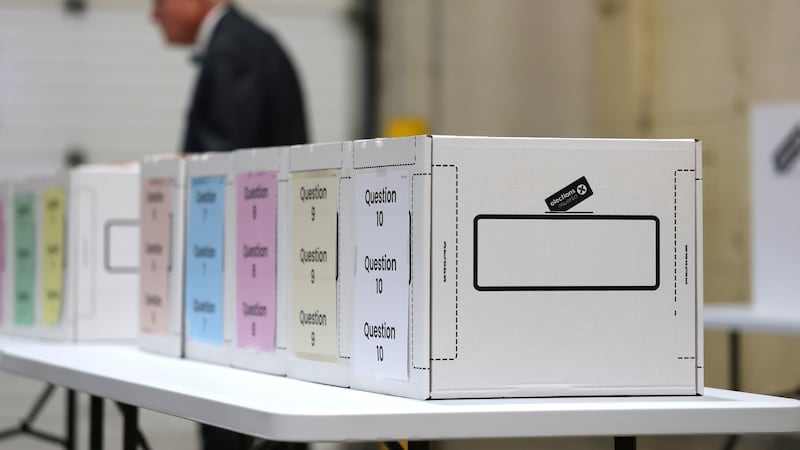
The Alberta legislature was home to a contentious debate on Thursday about the redrawing of provincial ridings ahead of the October 2027 general election amid concerns about how public feedback would contribute to the final changes to the electoral map. The Alberta UCP government wants to form a new commission to make recommendations on how the province might rework its electoral boundaries, given a recent population boom and the strain that puts on MLAs representing larger ridings. Recommendations were already made by a bipartisan commission last month, albeit indecisive ones. That panel was composed of independent members – two appointed by the Opposition NDP, three by the UCP – who consulted with more than 1,000 public submissions as per the Electoral Boundaries Commission Act. In the panel’s final report, two UCP-appointed members broke rank to author their own minority report, which suggested merging urban and rural ridings. The majority of other members said the proposed map was a non-starter as it would favour the UCP at the ballot box, a party which historically fares better in rural ridings. One member, panel chair Dallas Miller, suggested a redo of the commission with the intention of increasing Alberta’s number of ridings to 91, up from 87. Premier Danielle Smith’s caucus was set to introduce a motion to do just that on Thursday. If passed, a Select Special Committee of UCP-majority legislature members would oversee a new bipartisan panel on electoral boundaries in a sped-up process. The move has generated ire from the Opposition NDP, who accused Smith of gerrymandering – redesigning electoral boundaries around voting patterns that benefit one party – during chamber debate Thursday. “When the UCP realized that the commission wasn’t going to do what they had wanted them to do, they started to exert political pressure,” Alberta NDP leader Naheed Nenshi told reporters at a press conference Thursday. “They’ve created a new process which looks kind of like the independent process, but is not the independent process … they’ve explicitly said there’s no public input needed.” Smith said the additional seats being considered in a second bipartisan panel would allow for better rural voter representation amid population growth across the province. Minority report vs. majority report Susan Samson was one of the five members on the original commission and one of two appointed by the Alberta NDP. The commission was tasked with the year-long “math equation” of juggling population explosions with new ridings. This involves calculating a number of voters to a riding and then maintaining that number within 25 per cent. She helped pen the majority report, which recommended 89 seats. In his addendum to the majority report, which the UCP’s motion is based on, Miller noted that many of the minority report’s hybrid boundaries were “radical” and “unreasonable.” His recommendation was to restore two seats on top of the majority report’s 89-seat findings. “We travelled the province wide and long, and we spoke to Albertans, and we spoke to everyday Albertans, and we talked to mayors, we talked to elected officials … we also accepted written submissions, and we did virtual hearings, so we felt that we had good coverage and an understanding of what Albertans wanted,” Samson told CTV News. “It’s the closest thing to perfect that we could have with the tools given by the government, by the legislation and by the act.” Smith’s acceptance of the majority report was hotly contested by Nenshi during chamber debate, who said she was accepting the minority report in a roundabout way by proposing a new committee solely based on Miller’s 91-seats recommendation. “We are proposing the majority report with the addendum of (Miller’s recommendation),” Smith rebutted. MLA Brandon Lunty, who proposed the motion, told reporters a new bipartisan panel was called for in the majority report. He didn’t comment explicitly on the move to not include public feedback in a new committee. “When our advisory panel is struck, which is a process we’re looking forward to completing here in short order, they will have access to all of the information that the Electoral Boundary Commission has been able to collect,” he said on Thursday. ‘Question of fairness’ Mount Royal University political scientist Lori Williams said two commissioners making suggestions far off course from the majority report and the UCP’s proposal to oversee a new, fast-tracked commission raised “real questions about fairness.” Samson’s committee’s math equation is meant to be an independent process to ensure the division of electoral districts “are more or less fair,” Williams said. “The concern here is that that very fair year-long consultative process is now being thrown out the window, and they’re not just adding two seats, they’re changing the entire process … It doesn’t make democratic sense, and it raises questions about legitimacy.” Former lawyer and op-ed writer Marie Gordon echoed Williams’ concerns, saying it seems as though the Alberta UCP motioned for a new committee to “avoid accepting the work of the independent Electoral Boundaries Commission.” “They’re supposed to be independent. They’re supposed to be entirely apolitical. They’re supposed to ensure that they listen to Albertans,” she told CTV News Edmonton. Should the UCP government be allowed to create their own panel, Williams said there was a possibility the move is challenged on its constitutionality in court. “Ideally they should have an independent commission that does the public consultation. If they don’t do that, then it could be challenged in courts,” she said. If the motion passes, the new committee of MLAs and second bipartisan panel would have six months to report back on their new recommendations. With files from CTV News Edmonton’s Connor Hogg, CTV News Calgary’s Timm Bruch and The Canadian Press