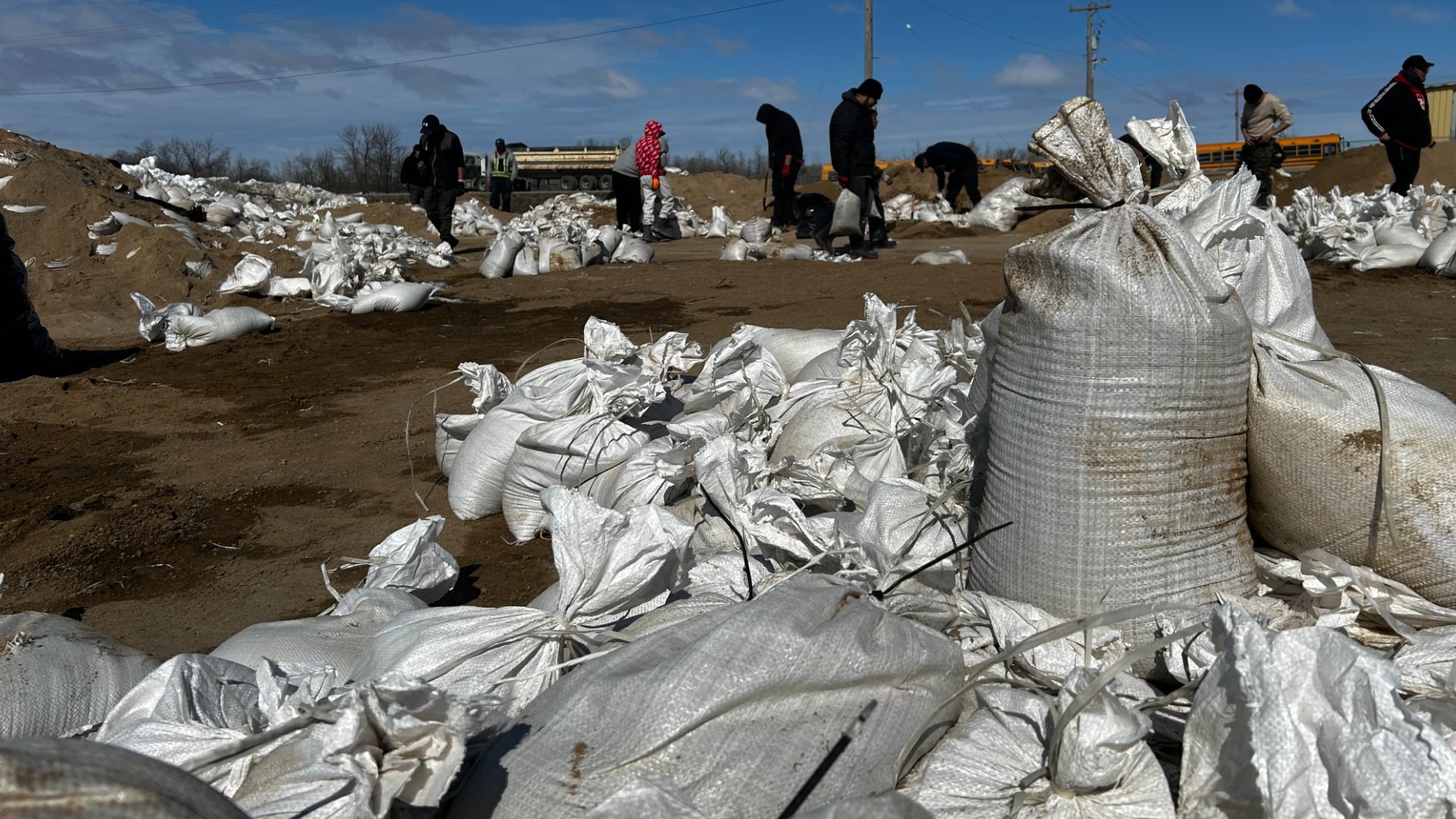
PEGUIS FIRST NATION, Man. – Allan Spence has spent his entire life in Peguis First Nation, and flooding has been a constant reality for much of that time. “It’s been happening for years,” he said. “Our first flood was back in the early ‘70s. It was bad.” More than five decades later, Spence is once again bracing for the possibility that his home could be affected. When CTV News spoke with him, crews were busy placing sandbags around his property in Peguis, located about 180 kilometres north of Winnipeg. “I would be having a hard time if all of these people didn’t show up.” Across the community, hundreds of residents are working around the clock, filling and distributing sandbags to protect homes at risk. At the local multiplex, where most of the sandbags are being assembled, Emmett Sutherland was among those hard at work. He said the community has been doing everything possible to prepare for the worst. “It’s very important to get these bags out,” he said. “We started preparing on March 30 and have been going up until now.” On Monday, crews were out in full force, not only making and delivering sandbags, but also deploying tiger dams as part of broader flood mitigation efforts. Support coming from across country It’s not just Peguis residents helping to protect their community, as support is coming from across the country. A team of volunteers from Team Rubicon Canada, a veteran-led organization that serves communities before, during and after disasters and crises, arrived in the community over the weekend. Drew Robertson, the team’s incident commander in Peguis, said they were asked by both the First Nation and the Manitoba government to provide support. “We’re still developing and refining our strategies and tactics on how to best respond,” Robertson said. There are 30 volunteers currently on the ground, with 17 more on the way. Robertson emphasized the importance of being present as water levels continue to rise. “Natural disasters don’t discriminate,” he said. “They affect urban centres, rural and First Nations alike. Team Rubicon is dedicated to serving and supporting communities in need.” “When we got the call from Peguis First Nations for support, we mobilized immediately to come work alongside them and accomplish their goals,” he added. The federal government also announced last week that it’s sending help to the community. Eleanor Olszewski, who serves as minister of federal emergency management, says she approved the deployment of “humanitarian personnel” to Peguis. She adds that she spoke with Manitoba Premier Wab Kinew and will work with the province moving forward. The province’s spring flood outlook forecasts the Interlake Region, which Peguis is part of, is at risk of flooding due to a large accumulation of snow, a delayed melt and an increased likelihood of rapid spring runoff. In 2014, more than 100 people were displaced due to high water levels in the community. In 2022, over 2,000 people were forced out of their homes. The First Nation has been advised that if conditions remain unfavourable, it could see water levels similar to the 2022 flood, considered one of the worst floods in the community. Peguis First Nation Chief Stan Bird says there are at least 225 homes and units in the community that need immediate protection. He says they are using a combination of sandbags, tiger dams and dykes to best protect the homes at risk. More evacuations possible Bird says they are doing everything they can to avoid a similar situation, but warns evacuations are “highly likely.” “(The) majority of our roads will be cut off,” he said. “Our people won’t have access to things like clean drinking water and food. We also have elderly people in the community that require frequent medical trips.” Bird says nothing is set in stone at this time, but is warning that evacuations are possible. He says he doesn’t even know where residents could go at this time. “At this point, those places have not been identified,” he said. “Our teams continue to look. A lot of the hotels in Winnipeg are currently full.” Need for long-term solutions Beyond the immediate crisis, leadership is pushing for lasting flood protection measures. Bird met with Manitoba Transportation Minister Lisa Naylor in community Monday to discuss future plans to better protect the community. “What we’re looking at right now is a combination of some diking, and also some retention ponds,” he said. “Retention ponds would collect most of the water before it enters into the community. Diking would be for those little areas along the river.” Last week, Naylor said a study is underway to determine the best options, but says it will ultimately be up to the community to decide how to proceed.