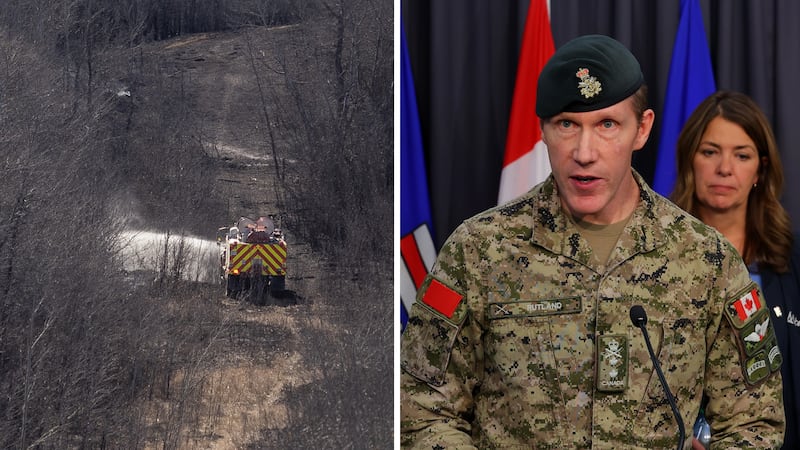
OTTAWA — Canada is on track for its fourth worst wildfire season on record. At a regular fire briefing in Ottawa Tuesday, federal forecasters said September’s fire risk stands to be well above seasonal averages across northern British Columbia., northern Quebec and most of Labrador. So far this year, wildfires have burned more than 40,000 square kilometres -- an area almost the size of Nova Scotia -- marking the first time in history that forest has burned for four years in a row in Canada. A wildfire destroyed around 150 homes, barns and other buildings in the south Okanagan region in B.C. earlier this month. In July, a fire also destroyed much of Namaygoosisagagun, also known as Collins First Nation, 250 kilometres north of Thunder Bay. That fire merged with others in the area and became the largest wildfire ever recorded in Ontario, spanning more than 3,500 square kilometres. Yet the number of requests for federal assistance related to wildfires dropped dramatically this year, government officials told reporters at a technical briefing. “Last year, we had received 11 wildfire related requests for assistance and extension requests. In contrast, only two wildfire related (requests for assistance) have been received to date in 2026,” said Craig Oldham, the director general with public safety and emergency preparedness. So far this year there have been 8,616 people evacuated from First Nations communities across the country fleeing wildfires, which is down from the 49,000 last year. “Since 2023, each year, consistently, we’ve seen the highest number of evacuees. This year, we are trending below our previous year averages. Last year we saw our highest number of evacuees ever, primarily driven by the Manitoba fires,” said Natasha Klink, the operations manager of the emergency management branch at Indigenous Services Canada. She said this year has seen the fourth-highest number of evacuees from First Nations communities. “Continuing this pace, we’re likely going to land at about the same levels as 2024.” Oldham said there are currently 580 wildfires across the country, with 30 being out of control, though he noted this year’s wildfire season is less severe than last year, which marked the second-worst wildfire season on record. Still, forecasters are anticipating a drier September across much of Canada, except for Alberta and Saskatchewan, making for a greater fire risk than usual. “It is important to note, however, that the seasonal baseline fire danger for many of these regions is typically very low in September,” said Yan Boulanger, a research scientist with Natural Resources Canada. “As a result, although the forecast indicates above average danger, significant fire growth is not considered likely.” The worst fire season on record took place in 2023 when more than 170,000 square kilometres burned, an area more than twice the size of New Brunswick. This report by The Canadian Press was first published Aug. 18, 2026.