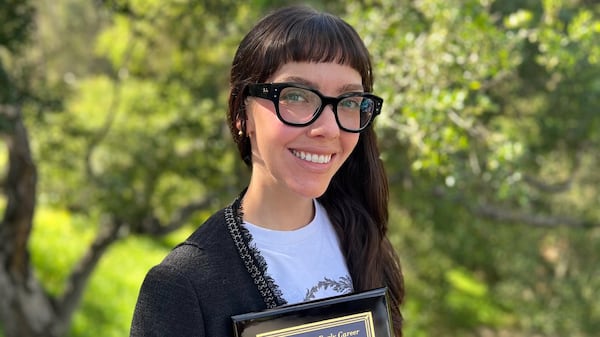
Women’s Shelters Canada is launching a new national awareness campaign, aimed at a group the organization says is often overlooked in efforts to address domestic violence: employers. The campaign, called ReferHer.ca, focuses on employers’ legal obligations to support workers experiencing domestic violence, as well as how warning signs are frequently mistaken for poor job performance. The initiative includes an announcement starring Canadian-Anishinaabe activist, broadcaster and filmmaker Sarain Fox, who appears on camera reading a letter addressed to an employer. In the ad, Fox urges the employer to reflect on a woman they overlooked or failed to support, assuming she was a bad employee, rather than recognizing she may have been experiencing domestic violence. “When I heard about this campaign and how many people were lending their services, their time, their talent, I knew that I wanted to be a part of it,” Fox said in an interview with CTV Your Morning Monday. “I just think it’s so important for the country to have tools to see this and to know what to do next.” Women’s Shelters Canada says the campaign is designed to help employers better understand how domestic violence can show up in the workplace and what steps they are legally required to take once it does. “There are obligations at both the federal and provincial levels,” said Anuradha Dugal, executive director of Women’s Shelters Canada, in an interview with CTV Your Morning Monday. She said federally regulated workplaces have specific requirements, while provinces have their own legislation. “Many workplaces are required to have a domestic violence policy,” Dugal said. “They usually have to post that publicly, so anybody can look at it.” She also noted that workers experiencing domestic violence may be entitled to paid or unpaid leave, though the specifics vary by province. “It might be five days paid leave. It might be some unpaid leave. It might be up to 15 weeks unpaid leave without any detriment to your work conditions,” Dugal said, adding that domestic violence does not look the same for every survivor, and its impact is often misunderstood. “Very often, it appears to be poor performance,” she said. “Absenteeism, turning up late, leaving early, being distracted at work, not being able to finish projects on time, or even feeling that somebody has changed their behaviour and no longer wants to socialize.” Dugal said the campaign encourages employers not to diagnose or investigate, but simply to notice changes, ask questions and connect workers to appropriate supports. “Asking an employee or a colleague what’s going on when their behaviour changes is important, no matter what the cause is,” Dugal said. “But finding out it’s domestic violence is essential.” Fox said the campaign is also about breaking the isolation many women feel. “So often, we feel like we are alone in our stories and our circumstances,” she said. “When we’re able to be vulnerable, or to ask someone how they are, it creates a space where we can actually be there for one another … “I want everyone to know that there’s always someone you can find to share your story with,” she continued. “You are never alone.”