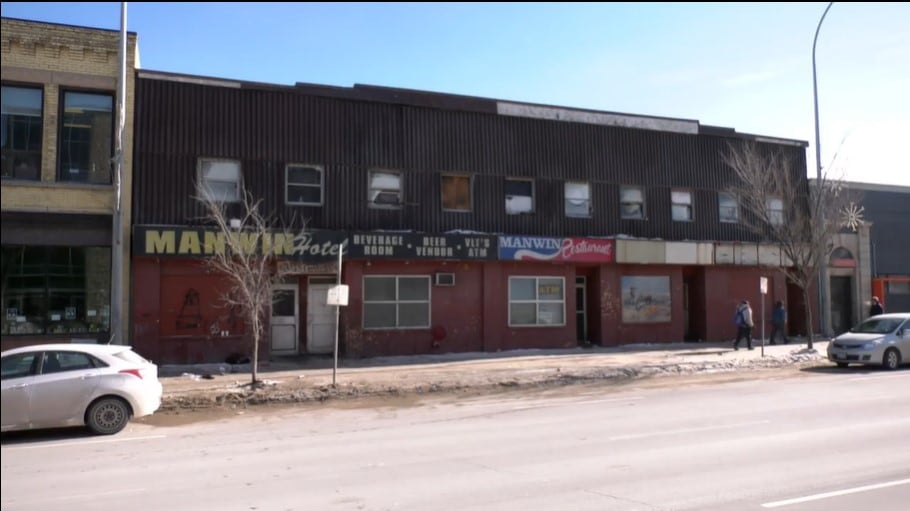
When Matthew Clark first heard about the fire that destroyed Winnipeg’s Manwin Hotel, he was devastated. The longtime tenant lived and worked at the hotel for 26 years and kept most of his personal belongings inside the building. Among them were sentimental items he says can never be replaced. “That’s where most of my stuff is,” Clark said. “I had a nice antique oak desk. It was a school desk when I was a kid. I had clothes and personal things stored in suitcases in the basement.” He says his daughter’s pictures were also among his belongings that burned in the fire, something he is now struggling with. City vacated building in early 2025 The Manwin Hotel building served as a residence for dozens of people over the last few years. The city had ordered the hotel to be permanently closed in January 2025 after it was plagued by crime and other issues. At a press conference earlier this week, Winnipeg’s mayor Scott Gillingham said this fire is proof the city made the correct call in shutting down the hotel, saying “this could’ve been a much worse tragedy if there were people living there.” Clark sees it as something else – a loss of a home. He was forced out of the Manwin Hotel last year and didn’t have a place to go to. He spent several months homeless. “I was just wandering the streets,” Clark said. “There was nowhere to go. Everywhere was booked up, or you couldn’t get a bed because there were already too many people. It was hard to find a place.” Clark was living in between three pieces of plywood at a local park. He was found by a group of people working for St. Boniface Street Links, a local organization focused on ending homelessness, reducing poverty and preventing crime in Winnipeg neighbourhoods. The team helped him get back on his feet and they are housing him in one of their many housing complexes. Not a lot of affordable housing in Winnipeg Marion Willis, the owner and founder of St. Boniface Street Links, says Winnipeg has a lot of aging infrastructure, including many heritage buildings. She says the city and province need to think proactively about how to fix the conversation around homelessness. “Rather than planning around budgets, and crisis intervention stuff, why are we not really considering just how diverse the face of homelessness really is,” she said. “There are a lot of different people, a lot of different needs. We don’t have a lot of housing in this city.” “We need to make the best possible use of what we do have, and there should be a plan that protects some of these older buildings for the low-barrier housing opportunities that they provide,” she said. Housing advocates, for years, have argued the province needs hundreds of new affordable housing units. But Willis says it’s not just about putting people in homes. “When we are housing people in low-barrier housing, from the moment that person is housed, you need to be engaged with them almost daily,” Willis said. “People need help making that transition from living outside to living inside.” Vacant buildings should be part of the housing solution End Homelessness Winnipeg says the housing crisis should not be addressed just through new construction. In a media release, the organization says there is an opportunity to view the city’s vacant and underused buildings as a pivotal part of the solution. But they also say the destruction of the building is a recurring and preventable pattern. “Winnipeg continues to experience a high number of fires in vacant properties,” the release reads. “Reporting based on Winnipeg Fire Paramedic Service data shows 274 vacant building fires in 2024, following more than 150 vacant building fires in 2023, with 166 additional vacant property fires recorded in 2025 as of October 31.” “At the same time, the City of Winnipeg Housing Needs Assessment 2025 reports that, as of September 2025, there were approximately 535 empty residential buildings under active Vacant Building By-law orders. These buildings represented about 980 housing units before they became vacant.” Outreach workers say the number of people living unsheltered continues to rise as shelters fill to capacity and affordable housing options remain limited. As winter temperatures set in, many are forced to take drastic measures to survive. “We have people living rough. We have people living unsheltered,” said Mitch Bourbonniere, a community outreach worker in Winnipeg. “For a variety of reasons, they don’t use some shelters or may not choose housing, so they find wherever they can stay and try to keep warm.” Bourbonniere’s business is just a few doors down from the hotel. He is worried more vacant buildings in the area will end up like the Manwin. “I fear that most abandoned buildings, or buildings that are empty or boarded up, will eventually become occupied and there is always a risk of someone getting hurt, and we just don’t want that.”