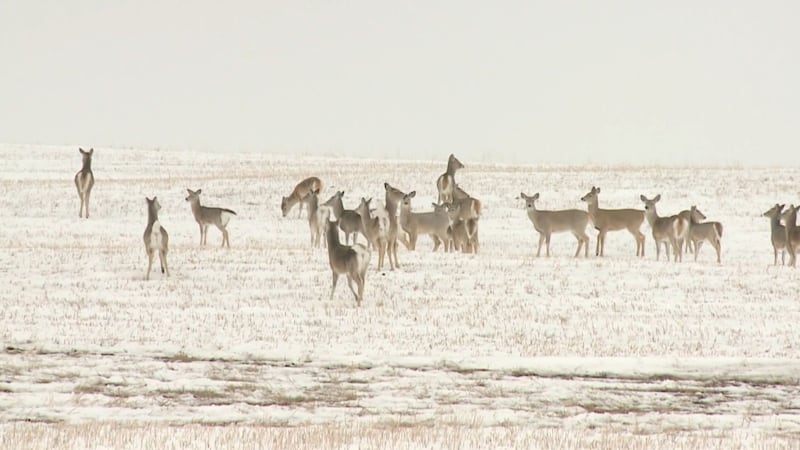
Alberta is legalizing the hunting of farmed elk and deer inside fenced enclosures. The province calls the change an economic opportunity for rural communities, but the move is drawing fire from wildlife advocates who argue the practice isn’t hunting at all. The plan appears in Bill 10, an omnibus red-tape-reduction bill introduced on Monday. The legislation removes Alberta’s longstanding prohibition on hunting domestic cervids (deer and elk) and permits “harvest preserves,” which the government describes as controlled hunts on licensed, privately owned land. The government says the change “creates an opportunity for deer and elk producers to provide a unique experience that will help bring much-needed new revenue to the cervid farming industry.” The government maintains preserves would be required to follow “rigorous recordkeeping of animals and their movements” and “comprehensive chronic wasting disease testing protocols, which minimize the risk of disease spread.” RJ Sigurdson, Alberta’s agriculture and irrigation minister, defended the move at an afternoon press conference. “There is a big draw for these cervid harvest preserves. This is what we’ve seen in Saskatchewan. We’ve seen a lot of dollars. They’re invested behind us. We see a cervid industry here in Alberta that wants cervid harvest preserves,” he said. “They’ve said this to me over and over again, and there’s a huge potential for them and the communities that surround them to be able to create an entirely new economy.” Sigurdson says producers have expressed to him the importance of the move. “When they first approached me—just over a year ago—(they said) that this is critical,” he said. While the government’s proposal is new legislation, the idea itself has been circulating for decades. Back in 2002, the elk and deer farming industry lobbied the province for similar authority. Then-premier Ralph Klein forcefully rejected the idea, calling the practice “abhorrent” and telling CTV, “85 per cent of the population think it’s not a fair way of killing a deer or elk. It’s not consistent with the concept of hunting as a sport.” Klein also argued penned animals should fall into the agricultural—not hunting—category, saying, “If they’re deemed to be domesticated animals, they should be treated the same way as cattle and bison.” But the push didn’t die there. Documents obtained by The Canadian Press in 2021 show the Alberta Elk Commission has been lobbying the province and rural municipalities since at least the spring of 2020 for legislative changes that would allow what it calls “cervid harvest preserves”—fenced areas for raising animals such as elk and deer, where paying guests could hunt the animals. Lobbying records show that in 2021, the commission communicated with three ministries seeking changes that would permit the farms to allow hunting, enable the sale of harvested meat and allow hunters to take their kills home. That same year, the proposal was also discussed at rural municipal councils, including the County of Lacombe. Sigurdson addressed that lobbying history on Monday, reiterating that farmers are struggling and need another revenue stream. “They (will) have an additional opportunity for revenue, and really, this is critical for their industry at this time when they’re struggling to be successful in that space,” he said. Concerns around the concept haven’t changed. Curtis Reed, wildlife chair with the Alberta Wildlife Federation and a hunter for more than four decades, says penned hunting violates the ethical principles that underpin fair-chase hunting. “Ethically, it’s not hunting; it’s shooting fish in a barrel,” Reed said in an interview. “I think it’s morally wrong.” Reed says fenced operations do not prevent contact between farmed and wild animals, increasing concerns about the spread of chronic wasting disease. “There is only a single fence on these places; there’s still interaction between truly wild cervids and the farmed ones, and disease can be transmitted back and forth,” he said. “That concerns us greatly.” Reed also disputes the province’s tourism rationale. “They (farmed game hunters) fly into Calgary, they drive over to the cervid farm and shoot their animal and go home,” Reed said. “I don’t know where this tourism stuff comes. They don’t stay in hotels. They don’t go into town. They stay in the lodge on the premises.” Reed says the hunts are marketed around antler size, not hunting skill. “It’s a guaranteed hunt, absolutely guaranteed,” he said. “You roll down the window, boom, call for the tractor and the loading truck and away you go.” Reed says trophy-class farmed elk command luxury prices. “You want a 350 bull elk; that’s $40,000. You want a 400 bull; that might cost you $65,000,” he said. Those numbers—350 and 400—referred to antler size and would be considered exceptional trophies. It’s a measurement used by the Boone and Crockett (B&C) Club to determine trophy-class animals. However, B&C holds as one of its core principles the concept of “fair chase,” which means it does not allow the registration of an animal that has been farmed or taken inside a high-fence enclosure. Reed says the UCP policy change threatens both wild herds and hunting culture. “The public perception will then be OK with these cervid harvest preserves—that that’s what hunters do,” he said. “But that’s not the ethics I want to pass on.” Reed says the change benefits very few people while putting wildlife and public trust at risk. “This government is taking these actions and putting our wildlife at risk and our ethical hunting principles to the side,” he said. “Just to help a handful of people who probably don’t need it.”