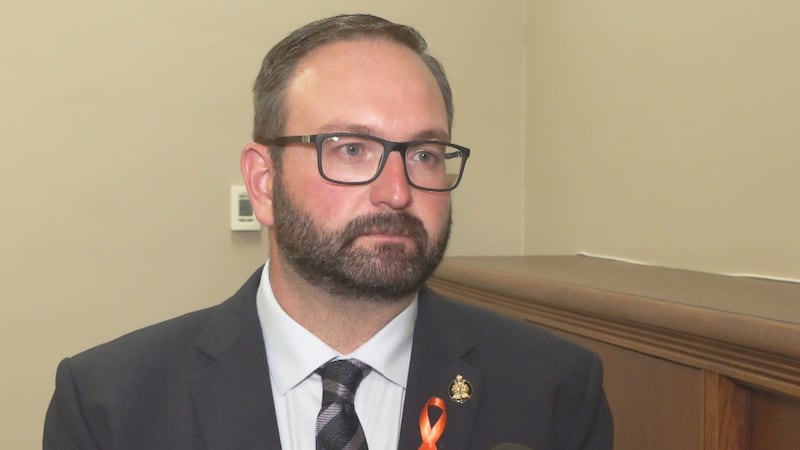
A movement is afoot to see Parks Canada’s decision to end its search-and-rescue dog program in Banff National Park reversed. Yellowhead MP William Stevenson is running a petition with that aim. The member of Parliament told CTV News on Friday the response to the petition “didn’t take very long.” “We were over 2,500 people within 24 hours. We were adding about 100 people an hour,” Stevenson said. “We were over 5,000 yesterday. “Quite a few people are concerned about this, and I think it’s the safety issue more so than the dollars.” Parks Canada’s search-and-rescue dog program in Banff National Park began in the early 1970s. The program involves specially trained dogs working alongside park wardens in Banff and other national parks. These dogs have helped locate missing hikers, find avalanche victims, track suspects and locate evidence during criminal investigations. They’ve also supported other emergency responders, including local police. Taking an axe to this program is the result of government-wide cost-cutting and cost-saving measures. In a statement, Parks Canada said it’s “working to modernize how it delivers programs and services to ensure they provide the greatest value to Canadians while supporting long-term sustainability.” Parks Canada said those efforts include “modernizing its law enforcement model.” “As part of these changes, Parks Canada has made the difficult decision to discontinue its dog handler program,” Parks Canada said. “Banff National Park had the agency’s only dog handler position in the country. “Park wardens are trained and equipped to enforce the Canada National Parks Act without the use of dogs.” Stevenson told CTV News he’s written a letter to the federal environment minister, whose ministry Parks Canada falls under. He said he asked what the reasoning was, how much the move is actually going to save and how the gaps it creates will be filled. “My personal opinion is probably not 100 per cent accurate, but when some of these decisions are made in Ottawa, instead of locally, I think they’re looking more at a spreadsheet,” Stevenson said. “The minister probably gave the direction of, ‘You guys have to find X dollars,’ and left it up to Parks Canada to find those dollars. “Maybe she doesn’t even know, so I’m making sure she knows very well.” The responsible minister is Julie Dabrusin, who represents Toronto-Danforth in the House of Commons. Canadian Avalanche Association executive director Joe Obad told CTV News his group “recognizes the Government of Canada has to make some hard choices.” He said Parks Canada “has a world-class reputation for its public safety team and the work it does.” He said part of that “is the search-and-rescue dog program.” “Dogs provide some very specific things that in certain cases, human beings and technology can’t,” Obad said. “Dogs have the ability to reduce the time that some aspects of rescue take. “It’s really about the safety of rescuers in many cases, and dogs help reduce the time that rescuers are exposed.” Parks Canada said in its statement public safety remains of the utmost importance. “Search-and-rescue operations will continue to be delivered through a range of trained personnel, operational resources, established procedures and partnerships. “We will continue to work with external organizations, law enforcement partners and specialized search-and-rescue providers, as appropriate, to ensure an effective response when needed.” Obad told CTV News his group supports reconsidering the decision. “It’s often the case that search-and-rescue teams operate as a network. ... The effect of this change has an effect on this whole network,” Obad said. “A key resource is being pulled out. “There’s really a cascading effect, and a lot of uncertainty in the community about how this is going to affect a key resource that folks have come to rely on.” With files from Mark Villani