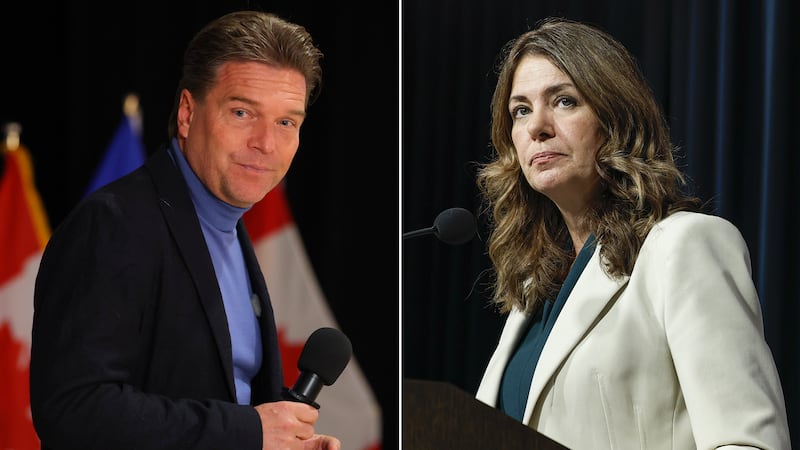
Most Albertans believe the provincial government wants to re-draw the electoral boundaries to improve its election chances, according to a new poll. However, the majority of Albertans want independent commissioners to draw the province’s new maps. Probe Research surveyed 1,484 Albertans online about the approach the United Conservative Party (UCP) government is taking to review and re-draw provincial electoral boundaries. “We saw a very strong majority of Albertans saying that electoral boundary changes should be made by an independent commission and not by elected officials,” said Robson Fletcher, a data and storytelling strategist with Probe Research. “That crossed partisan boundaries too, which you often don’t see in public opinion research.” The polling found 68 per cent of respondents overall agreed the process should be independent, including 66 per cent of UCP supporters who were asked. Six in ten of those polled also believe the UCP wants a new set of boundaries to better the party’s chances to win more seats next time Albertans vote. “We saw a strong majority of voters believing that the UCP was doing this to help themselves basically, and even a slimmer majority of UCP supporters believing that this was a government move to help them win the next election,” Fletcher said. Last month, the government passed a motion to scrap a bipartisan commission’s recommendations for riding changes and instead established a new panel made up of legislature members to oversee a review. The commission’s report was publicly released in April and contained two proposed opinions for changes to the electoral maps. The majority opinion suggested maps that saw two rural seats gone while additional ridings were created in Calgary and Edmonton. But a minority opinion, put forth by two UCP appointees, proposed new hybrid ridings that would blend urban and rural voters. The newly-created special committee on electoral boundaries is made up of six people, four of which are UCP MLAs. The new group will submit its conclusions no later than November. “As noted in the report of the Electoral Boundaries Commission, the majority of the Commission believes they would have been able to provide Albertans with more effective representation had the Legislative Assembly provided an additional two electoral divisions, bringing the total number of proposed electoral divisions to 91,” reads part of a statement from the UCP caucus. But the move has come with controversy and pushback. Alberta NDP leader Naheed Nenshi said the process is “not fair and it’s not right.” “It’s been clear for some time that the goal here is to dilute the voices of people in Calgary and Edmonton,” Nenshi said during debate in the legislature in April. The two NDP members appointed to the new boundaries committee also raised concerns about the re-do more recently. “These actions are a direct attack on fair, independent elections in Alberta. The UCP is trying to cheat and rig the next election by controlling the process and blocking transparency,” reads a joint statement from NDP MLAs Kathleen Ganley and Christina Gray. The Probe Research poll surveyed 1,484 Albertans online between April 27 and May 6, 2026. While online polls do not provide a margin of error, for comparison a poll of that size would have a margin of error of plus or minus 2.5 per cent, 19 times out of 20. With files from The Canadian Press