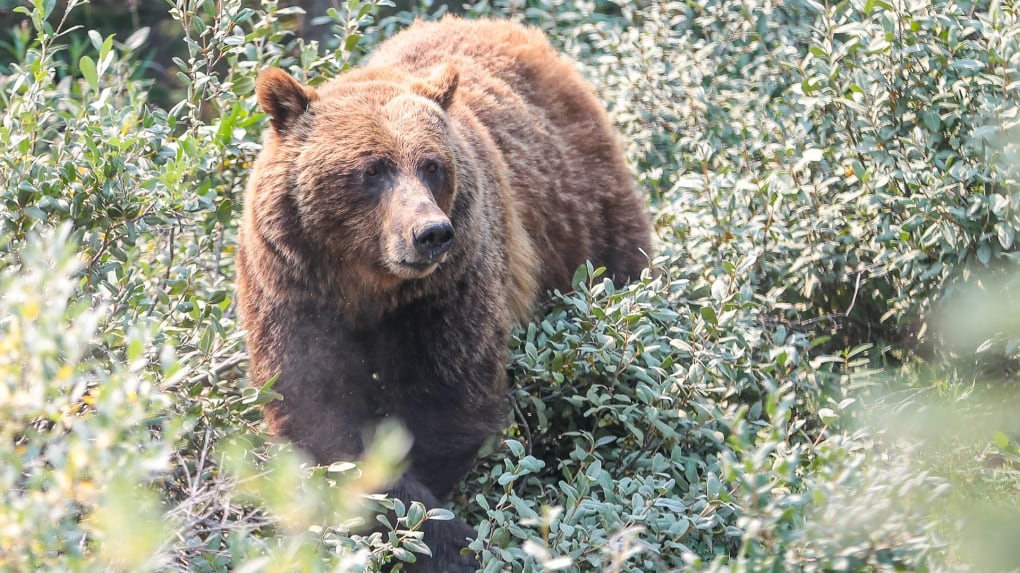
Alberta’s grizzly bear population will have a number put to it as part of a new monitoring project. The provincial government says the count and project will help inform efforts stemming from its ongoing Grizzly Bear Recovery Plan. Environment and Protected Areas Minister Grant Hunter’s office says monitoring grizzlies is “costly and labour-intensive.” It says this is “due to their wide-ranging movements and elusive nature.” “To help confidently identify population trends, Alberta is supporting a grizzly bear monitoring project led by fRI Research that is anticipated to run through 2026,” Hunter’s office said. “The project will provide valuable scientific information on grizzly bear populations, habitat use and ecology to help guide future management and recovery decisions.” Ruiping Luo, a conservation specialist with the Alberta Wilderness Association, says the organization is “glad to hear it.” Luo says a count is “long overdue.” “Most of our data on grizzly bear populations is over five years old—the recommended interval for monitoring in Alberta’s grizzly bear recovery plan,” Luo said. “An accurate and current count would add to the discussions around management and would clarify the extent that population recovery has been successful.” Grizzlies were listed as a threatened species in Alberta in 2010. The provincial government launched a Grizzly Bear Recovery Plan in 2020. Hunter’s office says the plan “has helped increase Alberta’s grizzly bear population from approximately 700 in 2010 to about 1,000 today.” It says results of the count and project will go to the Endangered Species Conservation Committee. The committee will then use the information to “help inform the next Grizzly Bear Recovery Plan and ensure Alberta’s recovery efforts continue to be guided by the best available science.” Luo says that’s what the Alberta Wilderness Foundation wants. “We continue to ask that wildlife management decisions be based on the best available science and information and would like to see any new information on bear populations from this count be used in Alberta’s wildlife management,” Luo said.