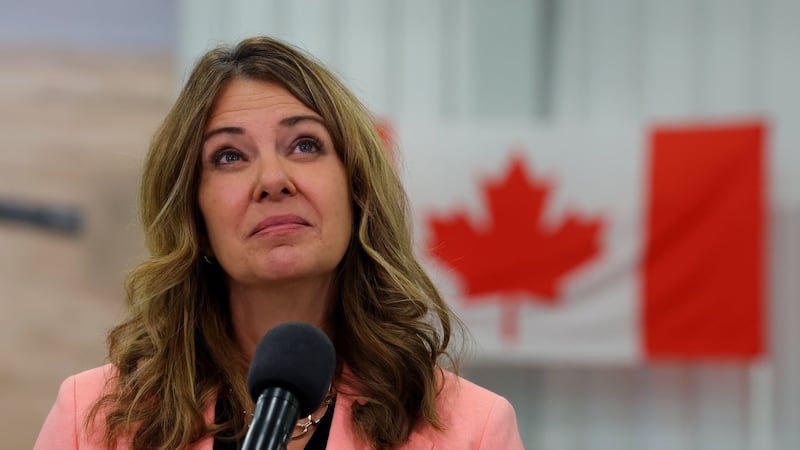
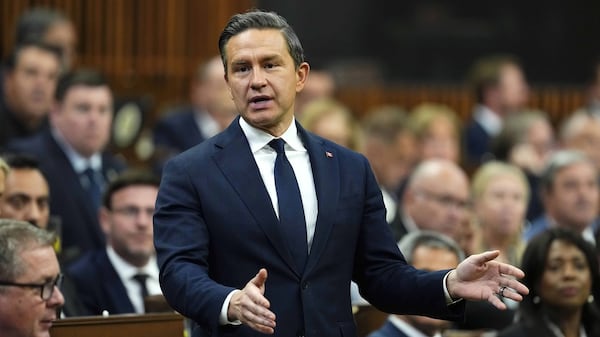
After expressing optimism earlier Friday over the prospect of a trade deal being reached between the U.S. and Canada, Alberta Premier Danielle Smith said late Friday that she was deeply disappointed when they fell apart. Smith posted on social media shortly before midnight as news broke that trade talks had broken off without a deal being reached. “I am deeply disappointed that Canada and the United States have not been able to reach a trade agreement,” Smith posted. “Alberta has always advocated for a tariff free relationship, and will continue to do so. No one benefits from a trade war. “Tariffs and counter-tariffs hurt businesses, workers and families on both sides of the border, while weakening one of the most important economic and security relationships in the world. “My first concern today is for the Albertans and Canadians whose livelihoods are at risk from these new tariffs and counter-tariffs. “I welcome the federal government’s intention to provide relief for those businesses that are impacted. Alberta will continue to advocate for a strong tariff free relationship between Canada and the U.S. and I will be urging the federal government to restart negotiations as soon as possible.” Talks collapse After weeks of intense talks, Canada and the U.S. have failed to strike a last-minute trade deal, meaning new 50 per cent tariffs on $28 billion-worth of Canadian goods are now in effect. Both Canada and the U.S. made the announcement in separate statements late Friday. Prime Minister Mark Carney says Canada intends to retaliate and match “those tariffs dollar for dollar to protect our workers and businesses.” While progress has been made, Carney says it has “not been enough” and trade negotiations will now be suspended, with additional support measures coming for Canadian workers and businesses. The prime minister also adds that “last-minute changes in the U.S. proposed terms were unfair, uneconomic, and called into question the reliability of any deal.” Carney held an hour-long press conference Saturday morning, where he said, “You’re at war when you get attacked. We got attacked.” Relatively unscathed Alberta has been relatively unscathed by Trump’s tariffs, which first came down on Canada in February 2025. Smith says 97 per cent of Alberta’s products being exported to the U.S. have done so duty-free. It’s a stark contrast from the effect the levies have had on other Canadian provinces. Ontario has seen massive supply-chain disruptions and major layoffs in its steel and auto industries, while the cost of British Columbia’s lumber has exploded due to severe levies. Smith’s response has been less severe than those of her counterparts. While all provinces pulled U.S. alcohol from the shelves when Trump’s tariffs first landed, Alberta put that liquor back on the shelves three months later. “It’s one of the areas that’s been a source of contention… to not have discriminatory procurement policies,” Smith said. Saturday on her radio program Smith said about $1.5 billion worth of Alberta trade (out of a total of around $180 billion in trade with the U.S.) would be impacted by the new tariffs, including honey and furniture makers. Other provinces: Saturday afternoon, Manitoba Premier Wab Kinew said he fully supports Carney’s decision. “History will not be kind to Donald Trump. So we should never appease him and we should fight back, which is what Canada is doing today,” said Kinew. “We can fight back against Donald Trump by buying from Canadian businesses, by supporting Canadian workers and most importantly, by living up to our Canadian values.” “Donald Trump has certainly changed the world, but he hasn’t changed us, and we also know that Donald Trump won’t be there forever. So let’s continue extending that hand of friendship to the American people, and hopefully they will have Donald Trump and his folks see the door very quickly and we could get back to better times with our neighbours to the south,” Kinew said. “Donald Trump wants to take away steel, he wants to take away manufacturing jobs from our country and we won’t let them. So we’re going to stand up for our country. We’re going to stand up because we know that the red maple leaf is stronger than that guy in the red hat down south.” Ontario Premier Doug Ford weighed in on social media, posting “Team Canada needs to stand together more united than ever before. “The prime minister has my full support for a strong response—tariff for tariff, dollar for dollar. “As we fight to protect Canadian sovereignty and economic security, everything needs to be on the table. Ontario is ready to do its part.” B.C. Premier David Eby posted that, “British Columbians will always stand with Canada. Our politeness should never be mistaken for weakness. “We’ll always defend ourselves. We didn’t ask for this, but we’ll keep fighting for as long as it takes.” Quebec Premier Christine Frechette: “”As the premier of Quebec, my priority is clear," she said in a statement. “Protect our economy, our businesses and our workers.” New Brunswick Premier Susan Holt said, “New Brunswick stands strong and united with Team Canada as we fight for a fair deal. “Some New Brunswick businesses have now been hit with an unjustified tariff that will hurt our economy, workers and families. “New Brunswickers have been fiercely loyal to our local businesses and producers. Now, more than ever, we need to double down on buying local and supporting New Brunswick businesses and workers.” Nova Scotia Premier Tim Houston posted: “Canada’s negotiating team tried to secure a deal for Canadians, which I’ve forcefully and vocally supported. “I continue to stand ready to support and work with the Prime Minister. We will work together to do everything possible to protect the massive number of Nova Scotian and Canadian families, workers and businesses that have now been added to the large list of those directly impacted by President Trump’s devastating tariffs. “It’s clear that we cannot trust or rely on the United States as we once did. This reality must make us more determined than ever to make Nova Scotia and Canada stronger. For Nova Scotia that means developing our own energy, developing our own natural resources and finding new markets for Nova Scotian goods and services. “We have tremendous opportunities and I am fully committed to seizing them.” Federal NDP leader Avi Lewis said he believed Carney made the right call. “The Prime Minister was right to walk away from the negotiating table last night. I believe Canadians are united in this crucial moment, on this crucial point: no deal is better than a bad deal. “Accepting a deal that would lock in pointless, destructive tariffs and undermine our ability to regulate big tech would have been disastrous for our workers, industries and sovereignty. PM Carney read the room by rejecting the Americans’ offer. “Wab Kinew got it exactly right — the President is weak and cannot be trusted to abide by an agreement. We should stand firm, knowing it’s what the vast majority of Canadians want our government to do. “But what happens next matters. We are not out of this yet.” Federal Conservative leader Pierre Poilievre also weighed in, saying, in part, “Conservatives are disappointed that the United States has chosen to impose further unjustified tariffs on Canada. They threaten the jobs and livelihoods of families right across our country.” Bloc Quebecois leader Yves-Francois Blanchet said, “”I welcome Mark Carney’s willingness to respond with tariffs of equal value," he said. “We believe these retaliatory tariffs must cover not only the new tariffs but also the illegal duties and tariffs already in effect.” Retaliatory tariffs On her radio program Your Province, Your Premier Saturday morning, Smith expressed concerns about the impact of counter-tariffs on Alberta consumers and businesses. “I know emotionally it feels good,” she said, .“(But) when retaliation happens, everyone who buys products from the US. face tariffs of up to 50 per cent.” Increased costs could include aluminum beer cans for Alberta craft brewers -- and farm equipment, which she said might get slapped with a 50 per cent tariff. “We shouldn’t be cheering if our farmers have to pay 50 per cent more for equipment to make our food,” she said. “That’s not a success.” “They (retaliatory tariffs) hurt everybody. It’s a real shame because I think the prime minister felt a lot of progress was made.” She also said the timing of the implementation of retaliatory tariffs -- the Tuesday after Labour Day (Sept. 8) -- suggests that Carney hopes a deal might get worked out by then. ‘No deal better than bad deal’: Calgary Chamber The Calgary Chamber of Commerce said in a statement that while the imposition of new tariffs will negatively impact the Canadian economy, making no deal beats signing a bad one. “While the Calgary Chamber is concerned about the follow-on effects of the deterioration of negotiations between Canada and the United States, we stand firm that no deal is better than a bad deal,” said Chamber president and CEO Deborah Yedlin. “We are encouraged by Canada’s unwavering commitment to our sovereignty, trade opportunities, and economic competitiveness. Canada has the resources, talent and global partnerships we need to be economically strong – and the collaboration between governments and industry in recent years will continue to buoy our economic prospects. “At the same time, we acknowledge the severe impact that both American tariffs and Canada’s retaliatory tariffs will have on the economy, impacting nearly 100,000 jobs across the country.” “Unlike previous tariffs placed on Canada, the new tariffs will supersede the Canada-U.S.-Mexico (CUSMA) Trade Agreement, exposing more Canadian products to the full weight of these costs. In light of this, we encourage the federal government to prioritize small and medium-sized enterprises in particular, including through short-term relief programs for businesses and workers such as increased support for the Regional Tariff Response Initiative. “Over the next two weeks, we encourage the federal government to closely consult provinces and businesses to minimize the unintended consequences of retaliatory tariffs. “This week’s trade negotiations underscore the ongoing importance of our domestic economy and pursuing opportunities within our borders. While progress has been made, there remains untapped potential to address internal trade barriers, strengthen supply chains, and pursue regulatory reform. We know Canada is strong when we stand together, work together and build together. “Our Canadian bench strength and unity continue to open doors around the world, and with trade agreements and partnerships covering 60 per cent of Canada’s GDP, we have no shortage of opportunity for our industries, businesses and workers. “It is vital that we continue to stand as a united front and strengthen our economy at home while pursuing opportunities abroad.” With files from CTV News’ Cassidy McMackon, Devon McKendrick and Stephanie Ha