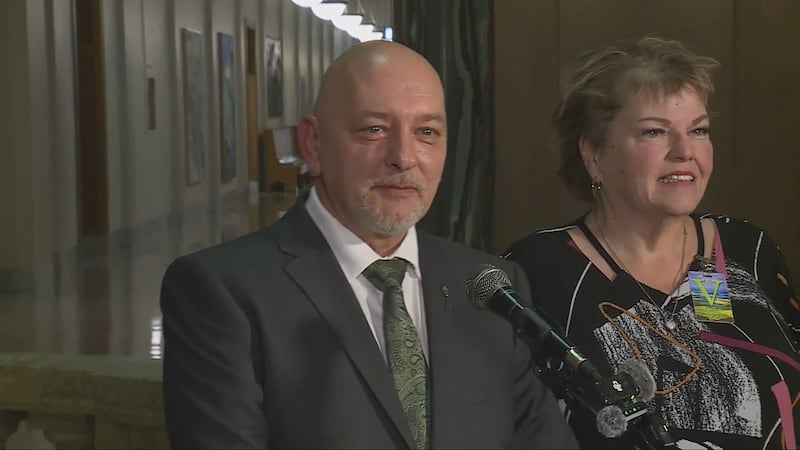
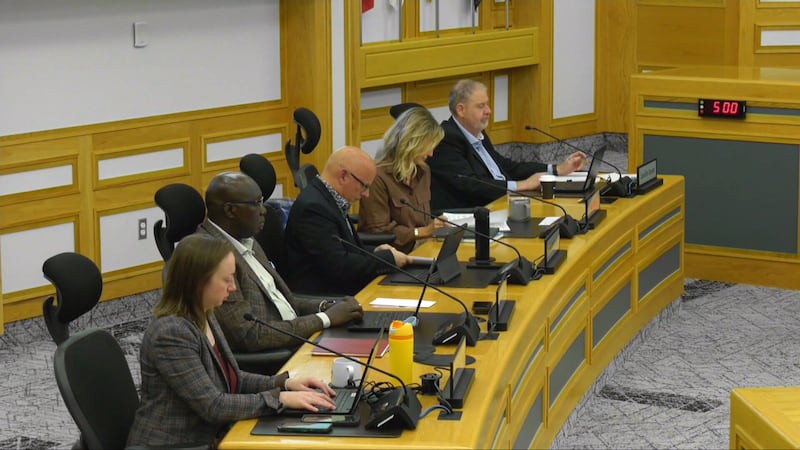
Groups representing businesses in Calgary call the newly-approved city budget disappointing and costly. While councillors were able to bring down the overall property tax increase that was on the table, it did so in part by cancelling a planned tax shift from non-residential to residential properties. “We’re disappointed. We would have liked to see city council continue with what had been previously approved in the prior budget,” said Deborah Yedlin with the Calgary Chamber of Commerce. “Now, we feel like this is an element of uncertainty that has been introduced in terms of the business community.” Before the marathon meeting of budget adjustments, the proposed property tax increase was 3.6 per cent combined, with single-family homes facing a hike of upward of 5.8 per cent. Cancelling the tax shift shaved off two per cent of the tax increase for residential properties. “Definitely disappointed to see council cancel the two per cent planned property tax shift. Businesses were really looking forward to this,” said Kayode Southwood with the Canadian Federation of Independent Business. “It’s going to create increased costs for businesses in the New Year and it’s really just not something that small businesses need to deal with right now amid the variety of other external challenges they’re facing.” On Wednesday, council approved a combined property tax increase of 1.6 per cent in 2026 for both homes and businesses. “This is the most business-friendly budget that Calgary city council has passed in the past 10 years,” said Mayor Jeromy Farkas. Farkas pointed to investments approved for public safety improvements, downtown office conversions and transit as priorities the business community had pushed for. Following the final approval of next year’s budget, councillors also green-lit a plan for a more gradual tax shift. It will see a 0.25 per cent shift each year for eight years starting in 2027. “It provides the certainty, the predictability of the tax shift going into the future, and a two point shift in property tax burden far in excess of the one per cent that they were asking for, albeit over a little bit of a longer time frame,” Farkas said. If the planned tax shift had moved ahead next year, Yedlin said the typical business would’ve seen a break of $2,150. Not only will that relief no longer come, non-residential property owners will face the 1.6 per cent increase. “It still says to everybody else who’s looking at Calgary, we’re expensive relative to other jurisdictions: Edmonton, Vancouver, Toronto, Ottawa,” Yedlin said. “This just isn’t helpful from a Calgary standpoint.”