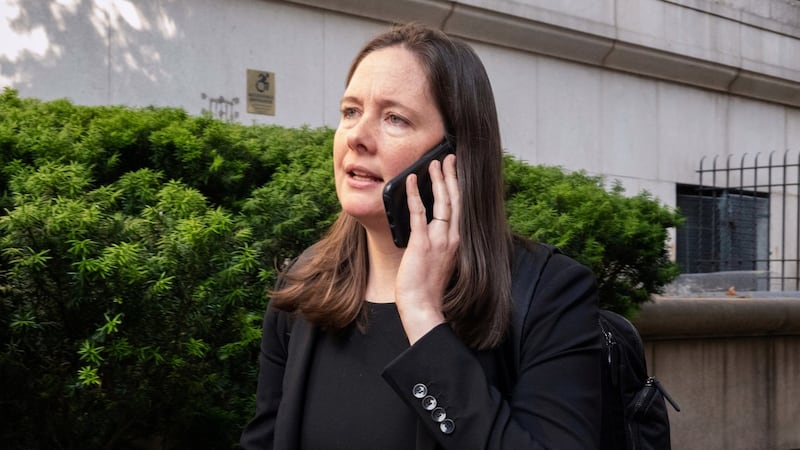
A Calgary flood advocacy group is calling on the Alberta government to accelerate upstream flood protection efforts along the Bow River, warning that critical infrastructure remains years away as environmental and Indigenous opposition to key dam options continues to grow. The Calgary River Communities Action Group (CRCAG) says residents living near the Bow remain vulnerable more than a decade after the 2013 flood, with major protections still years from completion. “We’re looking at at least another decade before we have the expanded reservoir capacity upstream on the Bow to provide flood mitigation,” said Charlie Lund, a director with CRCAG. “That’s a long time, and we would very much like to see it done quicker.” CRCAG supports the proposed Relocated Ghost Dam project but says the province must act with urgency. “All we can do is ask that the government move with all reasonable speed to complete the job,” Lund said. The province has narrowed its upstream mitigation options to one project — the relocation of the Ghost Dam, It had previously considered the construction of a new dam at Glenbow and a third site near Morley but those options have since been ruled out. A government feasibility study — expected on the Ghost relocation — has yet to be released, and any approved project would still face environmental assessments before construction could begin, possibly as late as 2037. Lund said he understands the study is “an extensive report that we understand is going to recommend the Ghost Dam relocation option as the preferred upstream mitigation on the Bow,” and that it “runs to thousands of pages and incorporates 50 sub-studies.” The group argues that the current flood hazard mapping policies fail to consider recent mitigation investments, leading to unfair outcomes for residents. “Flood hazard mapping is really important to riverside communities here in Calgary,” said Lund. “Whatever (the relocated Ghost Dam) protects to, that needs to be taken into account when the flood mapping is done … so that (the zones) are fair and appropriate.” CRCAG also wants the government to ensure that flood protection is effective for all vulnerable communities, particularly Bowness. “We believe that the solution that the government is proposing should work with the community of Bowness,” said Lund. “The information we have from the government so far uses higher flow rates than what Bowness can tolerate, and therefore would result in flooding.” The group has long advocated for a one-in-200 year flood protection standard, a benchmark also endorsed by the Calgary Metropolitan Region Board. However, Lund said, “this new dam is not going to protect to that level,” and CRCAG is calling for further exploration of alternatives or supplemental projects. “One project that has been identified by the Bowness Responsible Flood Mitigation Society is the Benchlands Reservoir,” Lund said. “We are asking the government to take a serious look at that as part of their Water Opportunities Project.” Meanwhile, the Siksika First Nation has filed a legal challenge, arguing the province failed to uphold its duty to consult on the Ghost reservoir expansion. Despite the slow progress, Lund said CRCAG has seen support for the Bow River protection efforts from all elected Alberta governments since 2013. “I had hoped we would be further along than what we are,” he said. “But I always have recognized that that is a longer-term project … I’d just like to see us further.” In a written statement, Ryan Fournier, press secretary to Environment Minister Rebecca Schulz, said, “Alberta’s government is taking action to protect communities from both flood and drought risks in the Bow River Basin.” “With the Springbank Reservoir on track to be fully operational this year, we are advancing the next phase of the Bow River Reservoir project,” he said. “Through Budget 2025, we’ve allocated $11.9 million over two years to support engineering and regulatory approvals for the Relocated Ghost Dam,” Fournier added. “We are also investing millions to expand Calgary’s flood protection system, and there’s more work to come.” Fournier noted that the province provided more than $3.5 million to the City of Calgary last month through the Drought and Flood Protection Program “to help expand flood protections.” “Alberta’s government also expanded the flood maps for Calgary and surrounding areas along the Bow and Elbow rivers – with more studies and maps to come,” he said. “A province-wide water storage review is also now underway, and applications will open for another $25 million in Drought and Flood Protection program funding this fall.” Assessment of the Ghost reservoir relocation is expected to move to the third stage to expected move to the third stage in early 2025. Full regulatory approvals may not be complete until 2030 or later. As a result, it’s possible construction may not proceed until 2037. More details are available in the Alberta government’s FAQ. CRCAG’s full position statement can be found here.