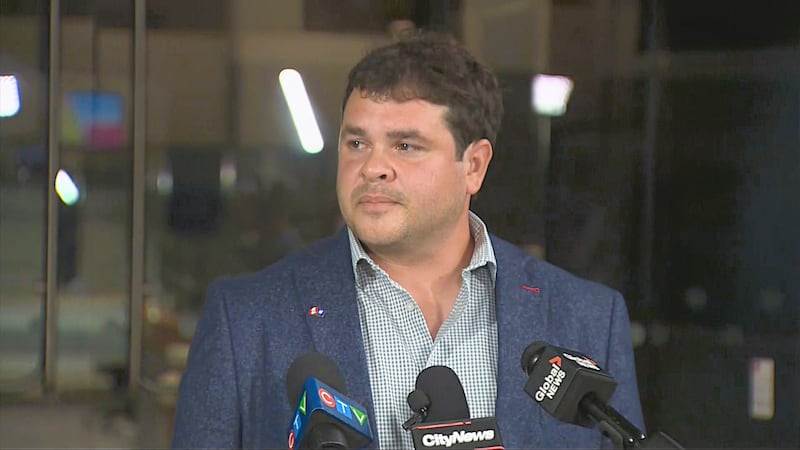
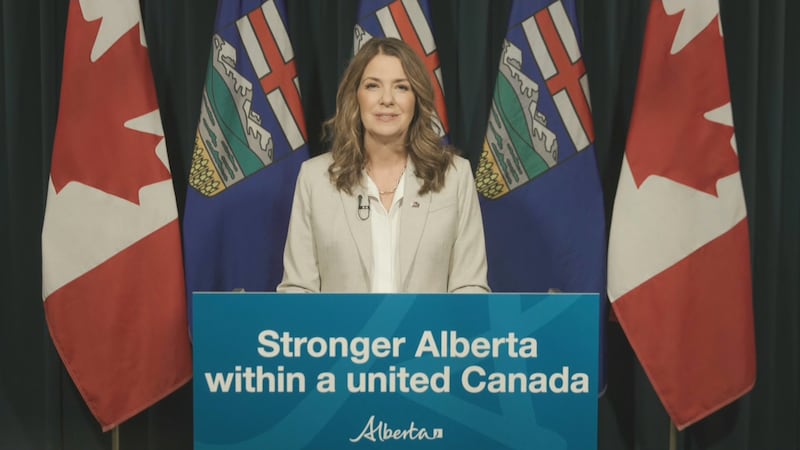
John Roggeveen didn’t want to be the Alberta Liberals’ interim leader for any significant stretch of time. Certainly not long enough to become the political party’s permanent top heading into the last provincial election. But no one else stepped up. So Roggeveen, a tickable Liberal name in every vote for Alberta since 2004, led his party into the 2023 ballot battle with maybe a “little more than a dozen” candidates, running a “less than $100,000” campaign. It went about how you’d expect ‘round these parts. It isn’t something Roggeveen feels he can do again—not right now, anyway. A couple weeks back, he put in his resignation. Reasoning came down to “having some health issues” and “still practising as a sole-practitioner lawyer.” “I don’t have the bandwidth currently to be leader,” he says. “I think somebody who has that bandwidth—has that capacity to do more than I can do at the moment—needs to be leader.” Roggeveen’s resignation is “effective on the date a new leader is either elected or appointed.” “I understand there are four people who have expressed interest in taking over the leadership of the party,” he says. “I’m confident I’m not going to have to stay on.” Roggeveen says his successor will face a tall task. The party doesn’t just need a new leader. It needs new people, both to run and to rally. New funding, too. And a new approach to make Albertans raise eyebrows, not noses. “It’s been hard to draw people to the party because it is such a steep, uphill climb, and that takes people who have to be pretty committed,” Roggeveen says. A new name altogether is something that’s been bandied about. What’s in a name, anyway? Political parties in Canada are built on two things, a former Progressive Conservative cabinet minister and deputy premier says. One is the name of the party. Two is the name of its leader. Thomas Lukaszuk says the Liberal name “is radioactive” in this part of the country. “Albertans have an aversion to ‘Liberal’ even though most don’t understand why—they just do,” he says. “That’s why it’s so difficult for Liberals to win seats in Alberta.” It’s not a point Roggeveen particularly disagrees with. “We should be looking at what’s behind the label. What’s the policy? What’s the idea? What are you trying to accomplish?” he says. “We really seem to be stuck on labels. ... Maybe that’s just the way we are in Alberta.” Lukaszuk isn’t sure there’s so much fondness for the NDP name here either. He believes Rachel Notley’s NDP won in 2015 primarily because Albertans were sick of the PCs. And if Naheed Nenshi’s NDP wins the next race, he believes it will be primarily because Albertans are sick of the United Conservative Party born of 2017’s PC-Wildrose merger. He’s not sure how this recent push to resurrect the PC name will go over. The Alberta Liberals’ current spot isn’t such a bad place, Lukaszuk says. Name a leader and rename the party, he says, and “now, you have something; now, you can go with that.” He believes Albertans are ripe for whatever option measures right by level of correctness rather than political lean. The divide between parties didn’t used to be so vast, but he says politics are different now. He calls it “tribal.” “It’s either you’re this tribe or the other and you defend your tribe at all costs and attack the other tribe at all costs,” Lukaszuk says. “It’s no longer about being right or wrong or compromising. “But I think we’re getting to a point where people are starting to get tired of that.” ‘A weird political formation’ Trevor Harrison, a retired political science professor at the University of Lethbridge, calls Alberta “a weird political formation.” “(It’s) a mix of traditional conservatism, more than a hint of libertarianism and even liberalism, combined with overheated alienation and pro-U.S. sentiments,” he says. “The UCP has brought together many of these elements, but it is a cranky and unhappy place at times.” Harrison says what keeps it together is “anti-Ottawa, anti-Liberal rhetoric along with constant warnings of socialists—even communists—taking power.” He says the Alberta Liberals’ problem is “a moderately centrist party already exists—the NDP.” “If it leaned slightly more social democratic in the past, it seems to me largely a liberal party under Nenshi,” he says. “The party is afraid to do anything really radical,” he says, “lest it be accused of being a socialist front.” Of politics and pandemics Roggeveen became the Alberta Liberals’ leader against the backdrop of COVID-19. David Khan left the role in November 2020. At that point, the province’s original governing party hadn’t taken up a seat in legislature in half a decade. David Swann was the last Alberta Liberal to be able to shout at a premier during question period. Roggeveen became interim top in March 2021 and permanent in December 2022. He says a bit of political momentum early on and a sense of something starting to develop went to sick, quick. Because Zoom-knocking is not doorknocking. Nor is a wave on a screen a handshake. “(The pandemic) hampered our ability to do any expansion. It hampered our ability to get the message out,” Roggeveen says. But coming out the other side of that and running the campaign he did in 2023 will go down as his personal high point as leader. “I think I’ve at least succeeded in keeping the party alive,” he says. “It was in serious jeopardy of disappearing entirely, and in my heart of hearts, I know that would not be good for the province.” Realizing he can’t be the guy in the next race is a low point. Roggeveen believes the timeline is tighter than one might think, and he wants to see his party ready. He wants a new leader in place with time to do something interesting. Roggeveen has hope—for the future of his party’s leadership and of the party itself. “I think all of this has the potential for rejuvenating the party and getting more people involved, which was the whole point,” he says.