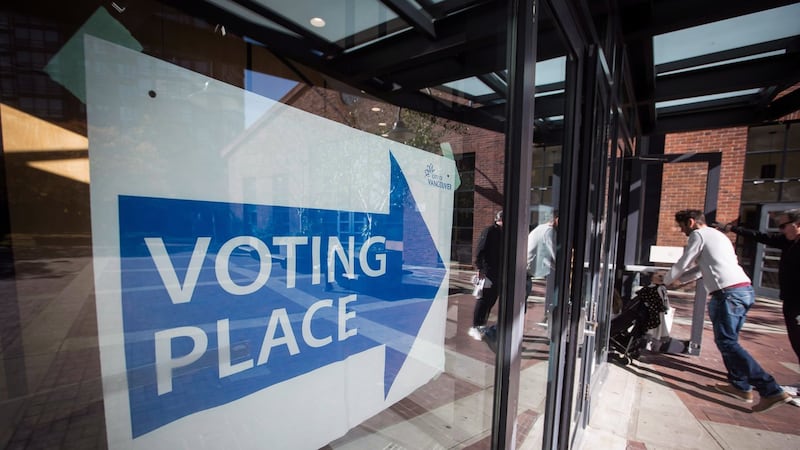
Advance voting closed Saturday in Calgary for the upcoming municipal election, with turnout suggesting that Calgary voters are feeling a little underwhelmed. According to a media release issued by the city, the early final, unofficial advance turnout was 96, 549 votes, or 10.7 per cent of eligible electors. The city said that total may change on Oct. 14 as they confirm the data as part of the verification process. Advance Vote turnout numbers included regular advance vote locations, hospitals, post-secondary institutions, the Vote Bus, CNIB office, Deaf and Hear Alberta office, and YW Calgary. Advance voting opened Monday Oct. 6, with 14,446 votes cast, and closed Saturday with 22,144 cast. The totals were down from 2021, when 141, 329 advance votes were cast over eight days, as opposed to six in 2025. The Calgary municipal election is scheduled for Monday, Oct. 20, with a recent poll suggesting a large chunk of voters are still trying to make up their minds which mayoral candidate they support. A poll commissioned by CBC Calgary and done by pollster Janet Brown showed a tight three-way race between Jeromy Farkas (27 per cent), Jyoti Gondek (23 per cent) and Sonya Sharp (23 per cent), with Jeff Davison in fourth at 16 per cent and Brian Thiessen fifth at eight per cent. Thirty-four per cent of those polled said they’re undecided, with one week to go until election day. ‘Remarkably high number’ Mount Royal University political scientist Duane Bratt said the number of undecided voters so close to voting day is unusual to say the least. “That’s a remarkably high number for an election that’s only a week away, and I think it’s just tied into the fact that it’s a close election, and it’s really not getting a lot of engagement in Calgary,” Bratt said. “You put those things together, and that’s how you end up with a very large undecided number.” He said the municipal election is finding it hard to find a niche in the news cycle. “There’s lots of other things that are occurring, whether that is Mark Carney and his relationship with Donald Trump, issues around the provincial politics, a teacher strike, a whole variety of things,” he said. What’s striking is that there are a lot of candidates still within striking distance of winning. “This has been a very low, engaged election, despite the fact it’s as close as it is,” he said. “And despite the fact that one of the purposes of political parties, which we’re seeing for the first time, was to generate more more buzz. “And that has not happened.” He said it’s possible that introducing political parties at the municipal level has muddied up the choices in the minds of some voters. “This is the first time that we’ve used parties,” he said. “They’re not connected provincially or federally to other parties. They all have similar names, and even on the mayoral stage, there doesn’t appear to be a lot of difference in the policies between the parties. “They all want to either repeal or reform blanket rezoning,” he said. “They want to address crime, they want to improve transit, they want to keep taxes low. So what separates them is going to be very tough for the average voter to figure out.” He said low turnout elections tend to favour the incumbent, " but Jyoti Gondek has been in trouble,“ he added. ”She’s got four good candidates swinging at her. She could win this or she could lose. “I mean, it’s just too close to tell.” For more information about voting on Oct. 20, go here.