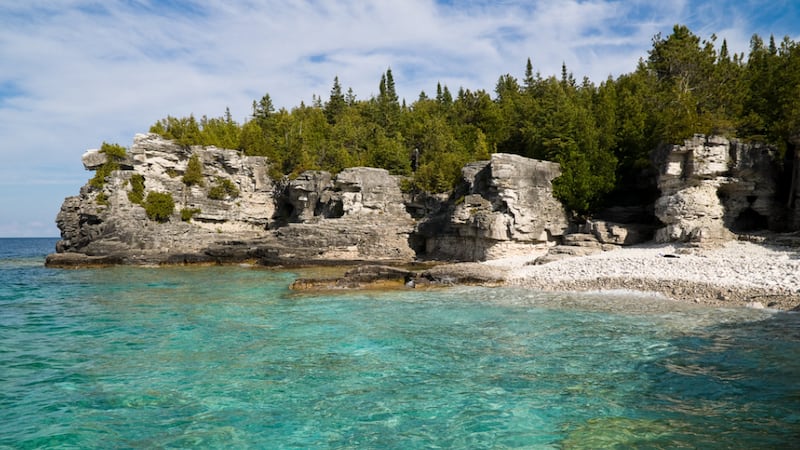
As part of Canada’s plan to modernize the North American Aerospace Defense Command (NORAD), the Department of National Defense (DND) is exploring the first transmit and receive site for the Arctic Over-the-Horizon Radar (A-OTHR) project. Clearview Township was selected by the DND in July of last year and since then residents have heavily rejected the idea saying the land DND wants contain premium farmland. RELATED: Residents voice concerns over massive defence project coming to Clearview Township The DND purchased 700 acres with its eyes on another 6,000, with hops of installing the A-OTHR project. Parts of that land contains the Minesing Wetlands, a sophisticated freshwater ecosystem covering more than 7,200 acres. Danny de Boer and his family have farmed on the land for generations and said the wetlands play a crucial role in day-to-day operations of the farm. “That’s where our flood waters go, it maintains a nice water table for our plants, for our high fertile soils here so we can grow crops,” said De Boer. “You work with it and I think it’s a beautiful thing.” The lands is sophisticated as it is fragile, the freshwater swamplands contain hundreds of animal and plant species including many at risk or endangered. Related: Clearview Township pushes back against DND radar project on farmland According to Friends of Minesing Wetlands, the area sees over 220 bird species, 500 species of plants, 37 species of fish, 18 species of reptiles and amphibians, and 33 kinds of mammals. 41 of those species are considered at-risk or endangered. The World Wildlife Fund Canada (WWF) advocates for the protection of wetlands and said there are many unique species inside the wetlands that can only be found in Minesing. “We can think of birds like the cerulean warbler that’s endangered, but that we know uses the Minesing Wetlands and so do wood turtles, in fact, all species of turtles in Ontario are species at risk. Some of them like the wood turtle are endangered,” said freshwater specialist Catherine Paquette. “So, preserving what we have left and restoring what we’ve degraded is hugely important.” Paquette added that wetlands are continuing to disappear and extra protection is needed. “In Ontario alone, we’ve already lost more than 70 per cent of our original wetlands. In southern Ontario, it’s even more and so when we need to protect what we still have,” said Paquette. According to Friends of Minesing Wetlands, no wetland removals have been proposed at this time. In a statement to CTV News Friends of Minesing said: “We would be quite concerned about wetland removals, if that was ever to become part of the project, but this does not appear to be necessary for the project. We look forward to understanding more about the exact development footprint of the project on the property as that information becomes available.” Despite the radar project not being built in the wetlands, even building near it can affect the ecosystem. “Wetlands are connected to everything else on the landscape, to all the other creeks and rivers and, forests and everything else that might be around and so any disturbance, even outside of the actual wetland can definitely have an impact,” said Paquette. The DND has stated they need dry, flat land, leaving farmers in the area confused and wanting more answers. “It might look flat, but it’s not, the property the DND currently has purchased, there’s over 35 feet of fall, and they want to level that within a few inches,” said de Boer. “That is an insane amount of earthwork like you’re talking millions and millions of cubic yards of dirt that they must move to get that to level out,” he said, adding “what’s that going to do to the environment around?” CTV News reached out to the DND and asked questions regarding the impact on the environment and while they did not directly answer, a statement spoke to a public engagement session, that says environmental studies will be complete prior to any work being done. The DND is currently inviting the public to share their feedback, comments, and concerns about the project and its environmental impacts until May 10. You can find the submission form here