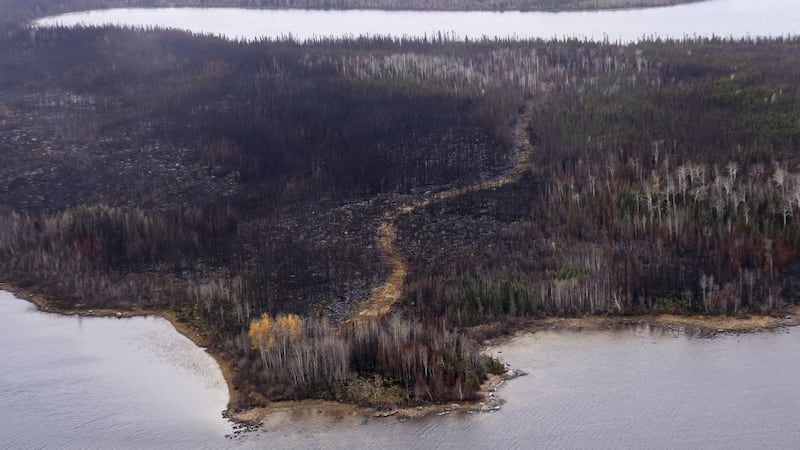
The Long Lake wildfire that has destroyed 20 homes in Nova Scotia is still out of control, but its size has not changed in the last day. On Monday, the Department of Natural Resources (DNR) said the Long Lake fire is estimated to be 8,465 hectares in size. “The southern end of the fire is the most active area and fire intensity increased with wind today. Helicopters are dropping water on this area so ground crews can safely enter to continue tying up the perimeter and advance inward on the fire,” said DNR in an update on social media. The department said Manitoba’s CL415 planes are being released and will be replaced by two black hawk helicopters which they say are more effective for current needs. The fire started on Aug. 13. Last week, the province said 20 homes were destroyed and 11 outbuildings were damaged or lost in the West Dalhousie area. As of Monday, DNR said there have been no new reports of damage. DNR said 61 firefighters from Ontario, 40 firefighters from Quebec and 61 firefighters from Nova Scotia are working on the fire, while their firefighters are getting a break. So far, 505 civic addresses have been evacuated. The County of Annapolis launched a navigator program Saturday to help impacted property owners and evacuees access supports. Woods ban lifted The province has lifted its woods ban in seven counties Friday, but it will remain in effect for the rest of the province, including Annapolis County. Nova Scotia introduced the woods ban on Aug. 5, imposing a $25,000 fine for anyone who violates it. “The woods ban is tough on everyone,” Premier Tim Houston said. “The last few weeks have not been fun. The team continues to monitor conditions. Professionals have determined, for some parts of the province, the index is no longer extreme. In other areas it’s still extreme. We are able to ease some of the restrictions.” DNR has issued 10 charges for woods ban violations. Smoke impacting air quality An air quality warning remains in effect for Annapolis County due to the wildfire. “You may experience mild and common symptoms such as eye, nose and throat irritation, headaches or a mild cough,” said Environment Canada. “More serious but less common symptoms include wheezing, chest pains or severe cough. If you think you are having a medical emergency, seek immediate medical assistance.” -With files from CTV’s Stephanie Tsicos For more Nova Scotia news, visit our dedicated provincial page