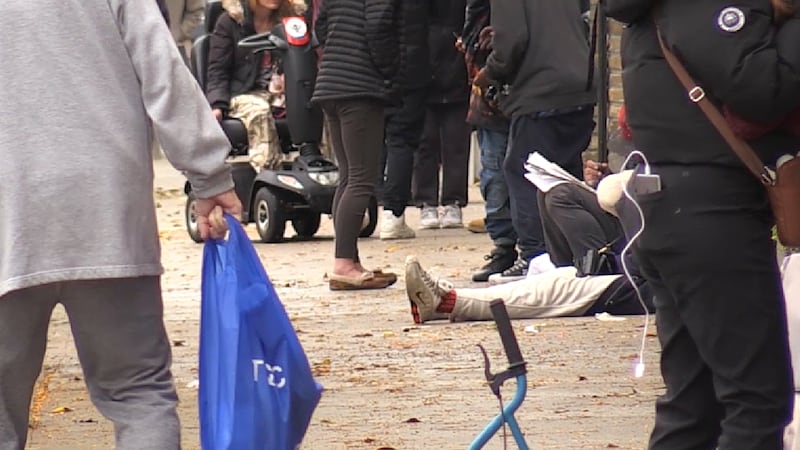
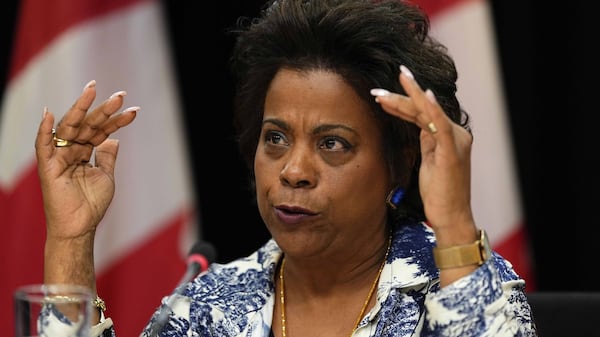
Saint John Mayor Donna Reardon said homelessness is a “worsening social emergency” in an open letter to New Brunswick Premier Susan Holt. Reardon is calling on the province to develop a fully resourced action plan to address the homelessness crisis. “The cost of this evolving situation, human, economic, and civic, is unacceptable and unsustainable,” the letter reads. “This is not only a Saint John challenge; it is a province-wide challenge that demands urgent, coordinated action across provincial departments, municipalities, frontline agencies, and the non-profit sector.” Reardon said the problems facing unhoused people include drug addiction and untreated mental illnesses. “Reports of rising criminal activity in the city have also surfaced,” the letter reads. “These challenges are impacting every aspect of our community, including public safety, local businesses, frontline services, and, most critically, the health and well-being of our most vulnerable residents. “Municipal governments are closest to the people. We see the challenges firsthand as we work to find solutions in Saint John with extremely limited resources. We hear the community’s daily frustrations, we feel the pressures, and we recognize the urgent need for solutions to address the full spectrum of issues on our streets.” David Hickey, minister responsible for Housing and MLA for Saint John Harbour, said homelessness is not directly related to public safety concerns. “I live on Waterloo Street. There is no question there are now changes that we have seen from a public safety perspective in our community,” he said. “We’ve seen it and everyone’s feeling it. To simply point to the provincial government and say it’s a housing issue, I don’t think it’s fair and I think it needs to be reflected across the community that we have larger public safety concerns to deal with.” Reardon cited the Housing for All strategy, which launched in 2024, as a guiding program for the city to help unhoused people. The strategy aims to provide safe community spaces across the municipality. One of the main components of the strategy are green zones, which are city-owned properties that provided transitional housing with essential services. The city introduced the green zones earlier this year in partnership with 12 Neighbours, which will develop and oversee the sites. “Our first Green Zone is now operational, and work on the second Green Zone is underway, with more transitional homes to come later this year,” the letter reads. “While we have made significant strides in advancing the Housing for All Strategy, this fall we will also pilot Red Zones, areas where tents cannot be erected within the city. At the same time, we will increase outreach resources to ensure Red Zones are respected with compassion and support. Even with these steps forward, much more remains to be done.” According to the city, 663 people experienced homelessness for at least one day in 2024 in Saint John and 344 people have experienced chronic homelessness. In a statement to CTV News Atlantic, Reardon said she would like the province to lead a collaborative approach with multiple groups to address the homelessness crisis. “I wanted to outline the social challenges within the community that have escalated to urgent, and ask for help,” Reardon said. “Municipalities are feeling swamped. We can’t solve these big issues on our own. We need the province with us.” Affordable housing announcement On Thursday, Hickey announced the planned opening of two public housing developments for working-age people in Saint John. The 10-unit modular complex on Boars Head Road, which will house non-elderly singles, is set to open later this year. Another 10-unit development is scheduled to welcome new tenants on Woodward Avenue early next year. Hickey said people will be chosen for affordable housing from a provincial waitlist. There are roughly 2,800 people on the list for Saint John. “Modular plays a really important role in our ability to get more on the market faster,” he said. “New Brunswick is really well-positioned from a modular perspective because we’ve got five leading modular factories in the country right here.” The province says there are now nearly 3,900 public housing units across New Brunswick. Hickey notes roughly 3.5 per cent of units in New Brunswick are affordable housing and their goal is to make that figure 20 per cent. -With files from CTV News Atlantic’s Avery MacRae For more New Brunswick news, visit our dedicated provincial page.