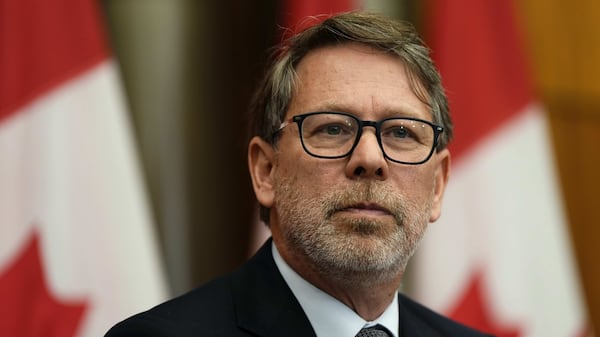
FREDERICTON — The New Brunswick government has introduced legislation that it says will make the province the first in Canada to protect young consumers from unfair online business practices. Justice Minister Robert McKee tabled the proposed law Tuesday. It includes the new Young Consumers in Digital Markets Act, which prohibits companies from engaging in misleading, deceptive or other unfair practices involving consumers under 16 years old. “This includes misleading young consumers or hiding important information from them, using pressure or urgency to encourage a young consumer to make a purchase or agree to something,” McKee told a news conference. The legislation also takes aim at business practices that make it difficult for young consumers to understand what they are agreeing to, or ads that unfairly influence young consumers’ decisions. The minister, who is also responsible for addictions and mental health services, gave an example of a young person who might start playing a game on a free trial, only to be charged for a one-year subscription when the trial expires. The new rules would apply to sellers of digital goods, such as ebooks and software, as well as providers of digital services including streaming, social media or artificial intelligence products. It would also apply to digital platforms that connect users to goods and services, including TikTok, Snapchat and Roblox. The act would be administered and enforced by the province’s Financial and Consumer Services Commission. McKee said he was confident the commission could take on this new role without any budget increase. The minister said investigations will be complaint-based and will apply to any company, regardless of where they are based. Proposed remedies could include cancelling an agreement without cost or penalty, cancelling future payments or ordering full refunds. In some cases, the commission could issue fines of up to $20,000 without a hearing. In more serious cases requiring a tribunal, penalties could include fines of up to $5 million and imprisonment of almost five years for an individual. Fines of up to $5 million are also possible for a business. “Sometimes these platforms will use tactics that, whether intentionally or not, pressure kids to spend money on an app or agree to a feature by using language they don’t understand,” said McKee. The government says it’s the first law of its kind in Canada, but similar legislation exists in Australia and Europe. The minister said the legislation will complement the federal government’s Bill C-34, which would force social media platforms to block access for children under 16. Introduced in June, the federal bill is making its way through Parliament. New Brunswick is also amending legislation to codify its previously announced ban on personal electronic devices in schools across all grade levels. That ban, which mainly applies to cellphones and tablets, went into effect in September for children in daycares and students from kindergarten to Grade 8. It will be expanded to students in grades 9 to 12 at the start of the second semester in February. Teachers can still use electronic devices to deliver curriculum content. There are also exceptions to the policy for medical reasons, such as a diabetic student keeping track of blood sugar levels. This report by The Canadian Press was first published Nov. 3, 2026. -- By Devin Stevens in Halifax.