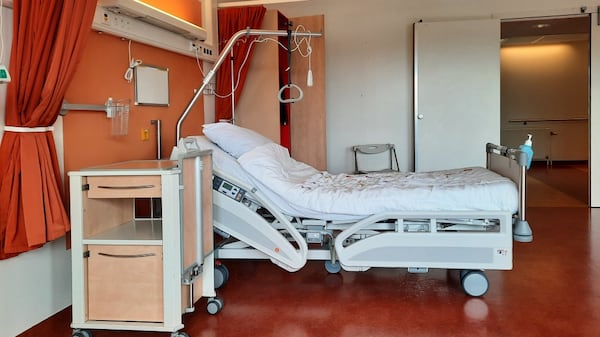
A new poll says most New Brunswickers support the idea of paramedics playing a greater role within the province’s health-care system, including hospital emergency departments. The survey, conducted by Abacus Data and commissioned by the Paramedic Association of New Brunswick, found 79 per cent of New Brunswickers were comfortable with the idea of paramedics playing a greater role in delivering health care. When it came to opening up responsibilities for paramedics in hospital emergency departments, 82 per cent presented a favourable view: The Abacus survey also found 86 per cent of respondents would be comfortable with the idea of personally receiving medical intervention from a paramedic if a physician wasn’t available — 27 per cent were “completely comfortable” and 59 per cent were “comfortable enough.” “The comfort in these potential changes and seeing paramedics serve in expanded roles in the health-care system cuts right across the province, across regions, and across other demographic groups, including voting groups,” said Kelly Bennett, vice-president and Atlantic lead for Abacus Data, in an interview. “There’s high comfort in every single segment with these potential changes.” Advanced care paramedics are already working within the hospital emergency departments in Miramichi and Sussex. “They’re seeing patients, providing care to patients, doing things that are within their scope of practice,” said Chris Hood, executive director of the Paramedic Association of New Brunswick, in an interview. “Something as simple as wound closures, so doing suturing as an example.” Hood says paramedics were also working within Doaktown’s community health centre, adding that other jurisdictions around the world were much further ahead in expanding paramedic roles. “They are seeing the value of paramedics and integrating them more exclusively into the health-care system,” said Hood. “We should be doing the same.” Hood pointed to what he called a new international trend of creating paramedic practitioners within health care systems. “So those would not be dissimilar to a nurse practitioner,” said Hood. “They would be independent prescribing paramedics that would have the ability to see independently, assess, and treat patients. Those are initiatives that are going on in the U.K. and Australia right now. “It’s not about challenging the work environment for any one practitioner. There’s lots of work for all practitioners. We shouldn’t be worried about turf protection. I think those days are long gone.” To date, Hood said there’s been an ongoing dialogue between PANB and the provincial government about what role paramedics could play within the Liberals’ collaborative health-care model. The Department of Health did not provide comment Monday on the poll, nor the expansion of paramedic rolls within the health-care system. The Abacus survey also asked respondents what they thought about the overall quality of health care in New Brunswick over the past year, with 46 per cent of respondents saying it had worsened, and 25 per cent saying it had improved. Abacus Data surveyed 600 residents aged 18 and over through its New Brunswick Omnibus survey from Oct. 24 to 30. The online survey used a random sample of panelists drawn from partner panels based on the Lucid exchange platform. The margin of error for a comparable probability-based random sample of this size is plus or minus 4.0 percentage points, 19 times out of 20. Abacus says the data was weighted by age, gender, and region to reflect the province’s population according to the latest census data. For more New Brunswick news, visit our dedicated provincial page.