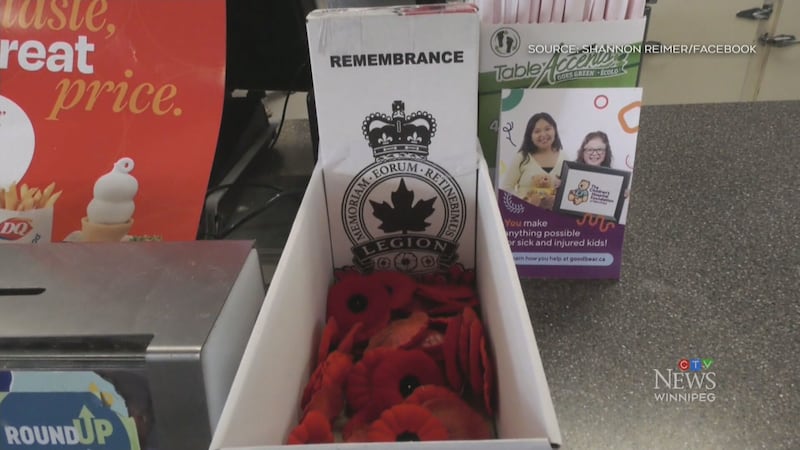
Canadians have been wearing poppies for more than a hundred years. The familiar red flower was adopted as the symbol of remembrance in 1921 by the Great War Veteran’s Association. In 1926, that organization became the Canadian Legion of the British Empire Service League, and eventually, the Royal Canadian Legion. This year marks the centennial of the legion’s national poppy campaign. Beyond its sacred importance as an enduring sign of respect and remembrance for the war dead, the poppy is an important source of revenue for the legion and its programmes. Contrary to what is sometimes said, the legion does not sell poppies. It gives them away. Those who so wish are free to make a donation. But a great many poppies are distributed without remuneration, to school children for example, to encourage remembrance. This year, the legion says will likely distribute about 18 million poppies and 70,000 wreaths and crosses. Over the course of the year, the Poppy Trust Fund will collect about $20 million in donations. That’s an average of less than a dollar per poppy – and that somehow doesn’t seem like enough, particularly when you consider this. Poppy funds are held in trust with the legion’s 1,350 local branches to support local veterans and their families with things like housing, medical supplies, meals-on-wheels, transportation and bursaries. So, the poppies we wear are not only symbols of remembrance to those who fought and died, they are also signs of respect for all of those who have served. Our neighbours and their families. The poppy has no cost – but when you take one, and wear one, be sure to make a donation that reflect its value.